Matte Vs. Eggshell
Choosing between matte and eggshell paint seems straightforward until you're in the paint aisle second-guessing whether the finish that looks perfect on a swatch will hold up at home. The difference runs deeper than sheen level. It touches washability, humidity tolerance, wall condition, and how a color reads across lighting throughout the day. This guide covers sheen science, room-by-room application, surface prep, maintenance, and the finish qualities that separate economy paint from premium formulations.
Should I use matte or eggshell paint? The answer depends on two factors: traffic level and moisture exposure. Matte delivers richer color depth and hides wall imperfections better, but it scuffs easily and cleans poorly. Eggshell handles moisture, light scrubbing, and daily contact without degrading. If the room sees regular activity, cooking steam, or small children, eggshell is the practical choice. If it is formal, low-traffic, and dry, matte performs beautifully.
If you'd rather put the decision in the hands of someone who's done it hundreds of times, Ace Hardware Painting Services handles finish selection, surface prep, and application start to finish, with premium Benjamin Moore paints and color consultation included so you're not guessing at how a finish reads on your walls.
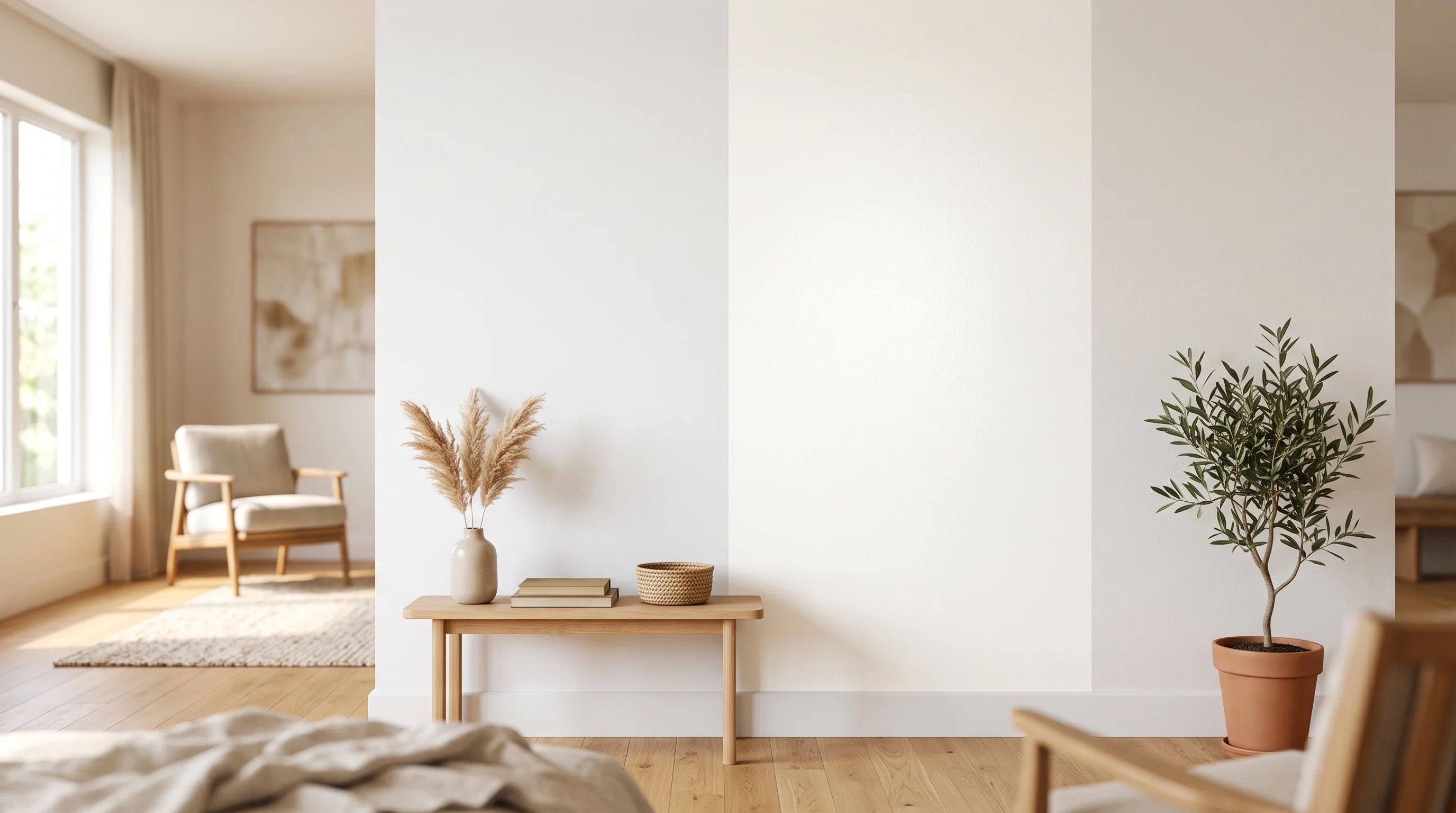
Quick Overview: Matte vs. Eggshell at a Glance
- Sheen level: Matte reflects roughly 2-5% of light; eggshell reflects approximately 10-25%
- Durability and washability: Eggshell withstands repeated cleaning and high contact; matte can burnish, smear, or lift with scrubbing
- Wall imperfection coverage: Matte hides surface flaws better due to its light-absorbing quality
- Moisture resistance: Eggshell tolerates humidity and steam; matte softens and stains in wet environments
- Color depth: Matte delivers a richer, more saturated look; eggshell adds a subtle luminosity
- Best spaces for matte: Formal dining rooms, master bedrooms, media rooms, low-traffic hallways, patched or textured walls
- Best spaces for eggshell: Kitchens, bathrooms, family rooms, children's rooms, high-traffic hallways
Understanding Sheen: How Matte and Eggshell Reflect Light Differently
Matte reflects approximately 2-5% of incident light, absorbing the rest. Eggshell reflects roughly 10-25%. That gap gives matte a soft, depth-rich look and eggshell a quiet luminosity. In morning light, the eggshell surface catches directional rays and reads warmer. At night under artificial light, eggshell can emphasize surface texture and minor wall imperfections more than matte will.
The difference goes beyond the percentage. Matte's flat, chalky quality makes colors appear more pigment-saturated because there's no reflected light washing the surface. A deep navy in matte reads dense and dramatic; the same navy in eggshell carries a slight glow. Same color, different outcomes.
Benjamin Moore's sheen spectrum places flat and matte at 0-10% light reflectance, eggshell at 10-25%, satin at 25-35%, and semi-gloss at 35-70%. Matte and eggshell serve different roles. Treating eggshell as a slightly shinier matte undersells the durability and washability advantages that make it the dominant finish in professional residential painting.
Matte Paint: When Aesthetic Comes Before Durability
Where Matte Excels
Matte is not a compromise finish. It is the right finish for specific conditions, where it outperforms eggshell on aesthetic grounds. Its light-absorbing surface minimizes wall imperfections: nail pops, joint compound edges, settling cracks, paint drips, and texture inconsistencies all recede. This makes it the preferred choice for older homes with imperfect drywall, walls repaired multiple times, or any surface where eggshell's reflectivity would highlight rather than conceal variation.
Formal spaces with low daily contact are matte's strongest case: dining rooms used mainly for meals, master bedrooms without pets, media rooms and home theaters where reflectivity would create glare during viewing, and traditional spaces where a flat surface reads as intentional. Here, matte's washability limitations rarely matter because the walls are not regularly contacted or cleaned.
What Are the Disadvantages of Matte Paint?
What are the disadvantages of matte paint? Its primary weakness is poor response to cleaning. Scrubbing with even a damp cloth can burnish the finish, creating shiny spots visible in raking light. Grease, moisture, and fingerprints absorb into the porous surface rather than sitting on top, making removal hard without damaging the film.
This is about paint film structure. Matte has higher pigment volume concentration and less binding resin than sheened finishes, producing excellent hiding power and color depth but limited mechanical resistance. Wiping scuff marks or crayon often spreads and embeds the material rather than removing it. This is why matte is unsuitable for kitchens, bathrooms, children's rooms, and any high-contact surface, regardless of how much you prefer the look.
Eggshell Paint: Durability Across Traffic Levels and Moisture Exposure
What Sheen Do Most Painters Use?
What sheen do most painters use? Eggshell is the dominant choice in professional residential interior work. It sits at the balance point between visual refinement and durability that most homes require: it tolerates regular cleaning, resists humidity in kitchens and bathrooms, and holds up under daily contact. Crews default to eggshell for main living areas because it performs reliably across diverse wall conditions and lifestyles without the strict use-case conditions matte demands.
Humidity Tolerance and Moisture Rooms
Eggshell tolerates humidity better than matte because its higher resin content creates a denser, less porous film. Where relative humidity regularly exceeds 60%, common in kitchens, bathrooms, and laundry areas, matte absorbs moisture. This softens the paint over time, makes it more susceptible to mold, and causes staining from steam and condensation. Eggshell's sheen indicates a more closed surface that moisture cannot penetrate as readily.
The primer matters in moisture-prone rooms. Even eggshell performs better over a moisture-resistant primer in bathrooms and kitchens than over standard interior primer. For matte in any humid room, a moisture-blocking primer is not optional; without it, matte in a bathroom begins showing staining and adhesion failure within one to two years.
Families, Pets, and High-Contact Surfaces
Homes with children and pets present constant low-level stress on walls: handprints at door frames, pet-nose smudges, scuffs from toys and furniture. Eggshell handles this without degrading, and mild soap and water on a soft cloth removes most marks without disturbing the film. Matte cannot. Choosing matte in a family room or child's bedroom means accepting visible marks or periodic repainting rather than spot cleaning.
What Are the Disadvantages of Eggshell Paint?
What are the disadvantages of eggshell paint? Its 10-25% reflectance means it does not hide wall imperfections as well as matte. On walls with visible joint compound texture, nail pops, or undulation, the sheen catches directional light and makes those variations more prominent. Eggshell also carries a higher risk of lap marks, particularly on large sections in warm conditions that speed drying. Premium grades reduce this, but at economy price points, eggshell can show application inconsistency that flat paint forgives.
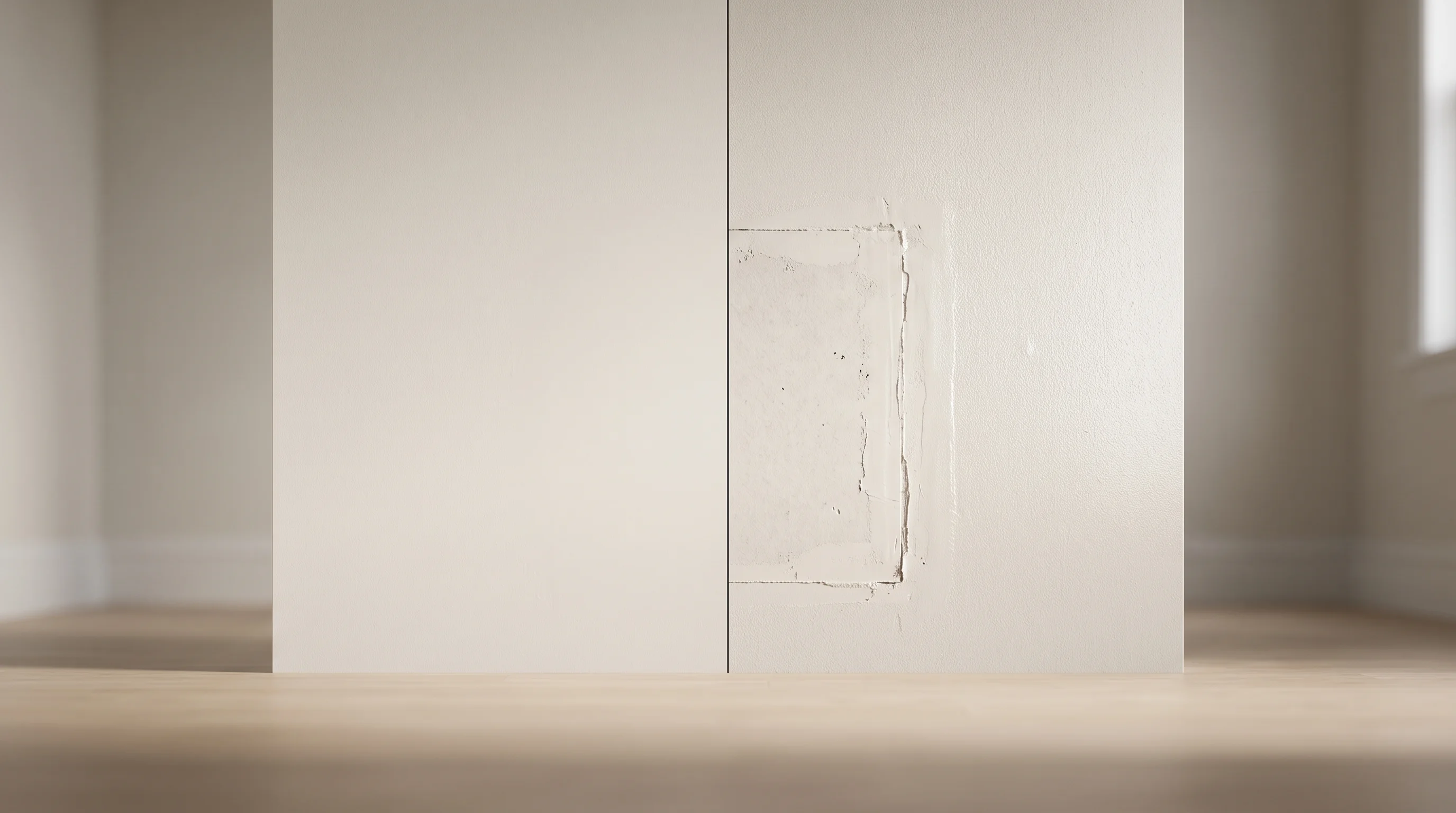
Room-by-Room Guide: Matching Finish to Function
Kitchens and Bathrooms
Kitchens and bathrooms are eggshell territory without meaningful exception. Both combine regular moisture with frequent cleaning, the two conditions matte handles worst. Kitchen walls accumulate grease, steam, and splatter; bathroom walls contend with daily humidity spikes and cleaning products. Eggshell's denser film resists moisture, tolerates alkaline cleaners, and wipes down repeatedly without burnishing. If repainting from an existing matte finish, apply a bonding primer before the eggshell coat for adhesion across the transition.
Bedrooms and Formal Spaces
Bedrooms and formal living spaces give matte its strongest argument. Traffic is predictable, wall contact is minimal, and the priority is color depth and calm rather than durability. Matte's light absorption makes colors read more saturated, which works well with the cooler neutrals and rich accents popular in master bedrooms and dining rooms. Eggshell also works here, particularly if walls were recently repaired or the homeowner wants a finish that stays viable longer between repainting cycles.
Family Rooms, Hallways, and Children's Rooms
Shared living spaces and circulation areas are eggshell's core zone. Family rooms see daily use; hallways experience shoulder-height contact and door-frame wear; children's rooms accumulate marks that need regular cleaning. In all three, eggshell's washability means maintenance time saved and fewer repainting cycles. Matte is possible here, but only aware that cleaning damage will require retouching rather than a wipe-down.
Preparing Walls and Priming: Critical Steps That Affect Finish Performance
Surface Prep Before You Paint
Finish performance begins before the paint goes on. Both finishes need clean, dry, lightly sanded surfaces for adhesion, but eggshell is less forgiving of contamination because its sheen reveals irregularities matte would absorb. Any wall being repainted should be washed with a degreaser or TSP substitute, dried, and sanded smooth at patched areas before primer. Existing glossy surfaces require scuff-sanding for mechanical adhesion regardless of finish type.
Primer Selection by Finish Type
The primer is a separate decision from the finish. For matte in rooms with any moisture, a moisture-resistant or mold-resistant primer is the minimum. Standard PVA primer seals new drywall in dry rooms but offers no humidity resistance. For eggshell in bathrooms and kitchens, a moisture-blocking primer such as an alkyd-based or specialized waterborne formula creates the barrier that lets the coat perform as specified.
Walls transitioning from matte to eggshell need particular attention. Matte's porosity means it has often absorbed staining material that will bleed through a new coat. A stain-blocking primer before the eggshell finish prevents tannin bleed, smoke discoloration, and water stain telegraphing. Skip it, and eggshell over stained matte shows the previous wall's damage within months.
Roller Nap and Application Technique
Both finishes apply well with a 3/8-inch nap roller on smooth to lightly textured walls; heavier texture warrants a 1/2-inch nap. Eggshell requires a wet edge to prevent lap marks: work in sections no larger than wall-panel width and keep a consistent pace so the leading edge stays wet when the next section is cut in. In rooms above 80 degrees, eggshell dries faster and lap-mark risk rises, so paint in the cooler part of the day or run air conditioning. Matte forgives lapping because its flat surface conceals junction lines, but proper wet-edge technique still applies.
Choosing the Right Paint: How Quality Tier Affects Finish Performance
Premium Formulations vs. Economy Grades
The durability gap between matte and eggshell is most pronounced in premium formulations. At the economy tier, binding resin content is lower across both finishes, so an economy matte and economy eggshell may perform similarly in a scrub test where premium versions would not. Homeowners sometimes test a cheaper product, find the differences subtle, and conclude finish selection does not affect performance. That is valid for that tier but does not transfer to premium formulations.
Premium waterborne enamels in eggshell, such as Benjamin Moore Regal Select or Aura, deliver higher scrub resistance, more consistent sheen, and better adhesion to primed substrates. The same manufacturer's premium matte offers better washability than economy matte but still falls short of eggshell in moisture-prone and high-contact rooms. For a finish that holds up across years, a premium formulation makes durability claims reflect what the paint actually delivers.
Benjamin Moore Matte and Eggshell Options
Benjamin Moore offers matte and eggshell across their major product lines, with Aura and Regal Select providing the highest durability at both sheen levels. Aura Matte includes a proprietary Color Lock technology that improves scuff resistance over conventional matte, partially closing the maintenance gap with eggshell in low-to-moderate contact rooms. Regal Select Eggshell is a standard recommendation for main living areas and high-traffic spaces. When color selection is part of the decision, color consultation with a professional can pair finish to specific room conditions and lighting, taking the guesswork out of how a color reads in a given sheen.
Matte Touch-Up vs. Full Repaint
Matte has one rarely discussed advantage: spot repair. Because matte reflects so little light, a touched-up area blends in more seamlessly than an eggshell patch, where the new sheen is not perfectly continuous with the aged surface and can read as a visible patch. The result is a trade-off. Matte walls that sustain damage need touch-up rather than spot-scrubbing, but those touch-ups are relatively invisible. Eggshell walls can often be cleaned without paint, but when repainting is required, patch blending needs careful feathering and sometimes repainting the full wall.
Choose matte touch-up over full repaint when:
- The damage is localized to one or two impact points rather than distributed across the wall
- The paint color is still available in the original formula from the original manufacturer
- The surrounding matte surface is relatively clean and has not significantly faded
- The room is low-traffic and the touch-up location will not see repeated contact
Proceed to full repaint when:
- Matte walls show widespread burnish spots visible across multiple lighting conditions
- Eggshell sheen has faded unevenly from years of cleaning, sun exposure, or humidity cycling
- The original color or formula is discontinued or significantly aged out of accurate match
- A finish change is desired, such as transitioning from matte to eggshell as the household changes
Maintenance and Long-Term Care
Matte and eggshell age in different ways and at different rates. Matte's porosity means it absorbs airborne grease, dust, and particulate over time, gradually shifting toward a grayed or yellowed cast. These deposits are hard to clean because the porous surface holds them below the film, and wiping creates burnish marks where the action has compressed and slightly glossed the film. Eggshell's denser film resists dirt absorption, tolerates a soft damp cloth, and does not burnish under normal contact.
What is the maintenance difference over time? Matte accumulates surface staining that requires repainting rather than cleaning, typically on a 3 to 5 year cycle in active spaces. Eggshell in comparable conditions can extend 7 to 10 years before wear-based repainting is necessary. Eggshell's failure mode differs: rather than absorbing staining, it loses sheen gradually in high-traffic areas where cleaning creates microscopic abrasion, and after years may show a dull band at shoulder height. Yellowing is more common in oil-based formulations and is largely resolved by premium waterborne eggshell products.
- Allow matte paint to cure 30 days before any cleaning; the film needs full cure time to reach maximum hardness
- Allow eggshell paint to cure 14-21 days before scrubbing; light dusting is safe sooner
- Clean eggshell with a soft, damp cloth and mild soap; avoid abrasive pads or concentrated cleaners
- Do not use Magic Eraser-style melamine foam on matte; the micro-abrasive removes paint film and creates visible sheen spots
- Dust matte walls with a soft dry cloth rather than wet-cleaning to extend the time between repaints
- Touch up matte paint as soon as damage occurs; delayed touch-up over accumulated dirt creates visible color discrepancy
- In bathrooms painted with eggshell, run exhaust fans during and for 15 minutes after showers to limit sustained humidity
- Inspect eggshell in high-traffic hallways annually for sheen fade at shoulder height; early recoating beats a full strip-and-repaint
Special Considerations for Challenging Wall Conditions
Not all walls start from the same baseline. Older homes with plaster, multiple layers of previous paint, or significant settling cracks present considerations beyond the traffic-and-humidity framework.
Plaster walls in homes built before 1960 often have surface irregularities, hairline cracks, and texture variation from previous decorative finishes. Matte is typically the better choice because it reads the surface as a textured whole rather than highlighting individual points, where eggshell catches light and makes variations more prominent. If the plaster is heavily repaired or skim-coated first, eggshell becomes viable again once the surface is uniform.
Walls with extensive joint compound patching require attention regardless of finish. New compound has a different porosity from the surrounding surface, so without a sealing primer the finish coat absorbs unevenly and creates "flashing," where the patch reads as a different sheen or color even after drying, more visibly under eggshell than matte.
Textured surfaces such as orange peel, knockdown, or skip-trowel finishes generally benefit from matte because it reads the texture as a unified treatment rather than a series of high-point reflections. Eggshell on heavy texture can look sparkled or inconsistent in raking light. If eggshell is preferred for durability in a textured room, a fine texture pattern applies better than heavy knockdown.
If your walls present multiple complicating factors, such as significant repairs, existing gloss paint, and moisture, professional residential interior painting from Ace Hardware Painting Services provides the surface assessment and prep expertise that turns finish decisions into durable results.
Things to Consider Before You Start
- How much traffic does this room see? An honest count of occupants, pets, and contact frequency determines whether matte is realistic or a recipe for frequent repainting.
- What is the wall condition? If imperfections need minimizing, matte does that work for you. If walls are smooth and recently repaired, eggshell is the durable default.
- What is the humidity profile? A dry bedroom and a kitchen with no exhaust fan are not equivalent moisture environments. Humidity determines primer requirements and can override aesthetic preferences.
- Are you willing to accept painting as maintenance rather than cleaning? Matte walls need periodic repainting in place of cleaning; that should be a conscious decision.
- Test a swatch in the room at multiple times of day. Eggshell reads differently under north-facing light than south-facing sun or warm artificial light.
If your answers land in the eggshell column because of high traffic, moisture, or a household that needs cleanable walls, the decision is straightforward. If they land in the matte column because of low traffic, aesthetic priority, or walls that benefit from light absorption, matte is the right call. Plenty of homes use both: matte in formal and sleeping spaces, eggshell in active living areas, kitchens, and baths. Splitting finishes by zone is not a compromise; it is finish-to-function matching.
Why Homeowners Bring in Ace Hardware Painting Services
- Our crews use premium Benjamin Moore paints and stains, including Aura and Regal Select in matte and eggshell sheens that deliver the durability and coverage the finish promises.
- Color consultation and color samples are included in every project, so finish and color selection happen together with a professional who understands how sheen affects the way a color reads.
- Our workmanship guarantee means that if something does not look right after the project, we address it. You are not left managing a sheen inconsistency or primer bleed-through.
- No specialty gear to source, rent, or return. Our crews bring the tools for edge cutting, roller application, and detail work that produce consistent sheen across every wall section.
- Background-checked crews arrive on a predictable weekday schedule, so you know when the project starts and ends without coordinating around contractor availability.
- Surface prep, priming, and application are handled as a single scope. Primer is matched to your room conditions and finish choice, not chosen by default from whatever is on the shelf.
- Cleanup is included. Tape, drop cloths, roller covers, and any masking for trim and fixtures are removed before our crews leave.
- The Ace Hardware name means a brand that earned trust in retail hardware before extending it to home services. That accountability matters when your walls are the deliverable.
When you're ready to move from finish decision to finished walls, your local Ace Hardware Painting Services office can walk through your room conditions, wall history, and color direction and build a project scope around what your home actually needs. Get an Estimate today and take the guesswork out of the finish decision.
Frequently Asked Questions
Is eggshell or matte better for a living room?
Eggshell is the more practical choice for most living rooms given regular contact and occasional cleaning. Matte suits formal living rooms with minimal activity, no children or pets, where aesthetic depth is the priority over durability.
Can you apply eggshell over existing matte paint?
Yes, but surface prep is essential. Clean the matte surface, sand damaged areas smooth, and apply a bonding or stain-blocking primer before the eggshell coat. Applying eggshell directly over dirty or stained matte risks uneven sheen and adhesion failure at problem areas.
Does matte paint always show scuffs more than eggshell?
Yes, in high-contact areas. Matte's porous surface holds scuff material and resists cleaning, while the cleaning action itself can burnish it into a visible sheen contrast. Eggshell's denser film lets scuffs wipe away with a damp cloth in most cases without damaging the paint.
How often does matte paint need to be repainted compared to eggshell?
In active rooms with regular use, matte surfaces typically need repainting every 3 to 5 years as staining and cleaning damage accumulate. Eggshell in comparable conditions generally holds 7 to 10 years before wear-based repainting is necessary. In low-traffic spaces, matte can last considerably longer without visible degradation.
What finish should I use on ceilings?
Flat or matte finish is the standard recommendation for ceilings in nearly all rooms. Ceilings see minimal contact, and matte's light-absorbing quality keeps the ceiling from catching artificial light in ways that make the room feel harsh. Eggshell on a ceiling is uncommon and generally produces an undesirable sheen effect under overhead lighting.
Does premium paint actually make a difference in matte finish durability?
Significantly. Premium matte formulations contain higher-quality binding resins and additives such as Benjamin Moore's Color Lock technology that improve scuff resistance and washability over economy matte. The upgrade does not close the full durability gap with eggshell in moisture-prone or high-contact rooms, but it meaningfully extends how long a matte finish holds its look.