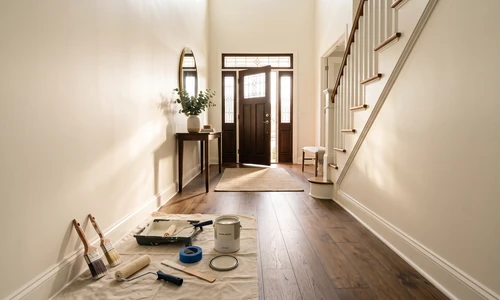
Eggshell Vs. Satin Paint
Choosing between eggshell and satin paint feels straightforward until you are in the paint aisle with two chips that look nearly identical under fluorescent light. The sheen difference is real, and it matters more in some rooms than others. This guide breaks down how each finish behaves, where each performs best, when to avoid eggshell, and how to match your choice to each room.
Is satin too shiny for walls? For most interior walls, no. Modern satin formulations sit well below semi-gloss, and the light they reflect reads as a soft luster rather than a high-gloss shine. Large, sun-filled rooms carry satin well; low-light spaces, or rooms where texture should recede, benefit more from eggshell.
If the decision feels overwhelming or the surface prep is more involved than expected, residential interior painting from Ace Hardware Painting Services covers every finish type, handles the prep, and includes color consultation so the finish you land on performs the way you expect.
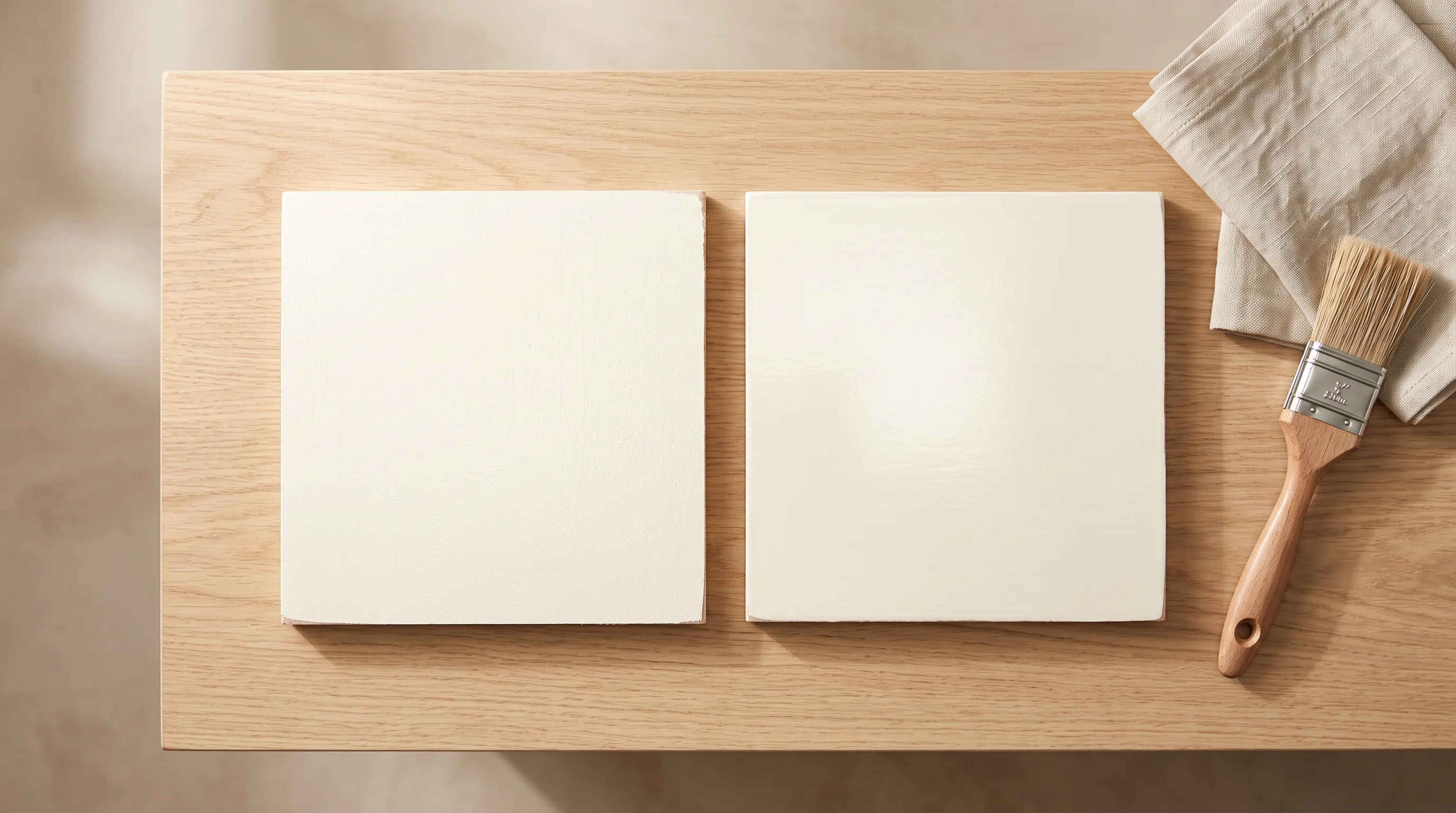
Quick Overview of the Eggshell vs. Satin Decision
- Eggshell sits just above flat/matte on the sheen spectrum; satin sits one step above eggshell, closer to semi-gloss.
- Satin reflects more light, is more durable, and is easier to clean once cured.
- Eggshell scatters light, softens the look of a wall, and conceals imperfections more effectively.
- High-traffic rooms, kitchens, and bathrooms favor satin for stain resistance and moisture tolerance.
- Bedrooms, living rooms, and formal spaces favor eggshell for its softness and forgiving coverage.
- Neither finish is universally superior; the right call depends on room function, surface condition, and how often walls need wiping.
- Finish labels are not standardized across brands; one manufacturer's eggshell may look shinier than another's.
Assessing Your Walls Before You Begin
Understanding the Sheen Spectrum
Sheen level describes how much light a dried paint film reflects. Finishes run from flat and matte through eggshell, satin, semi-gloss, and gloss. Eggshell sits at roughly 10 to 25 percent light reflectance; satin at 25 to 35 percent. In practice, eggshell scatters light for a soft surface that reads as nearly matte, while satin reflects at a more consistent angle for a visible sheen that catches the eye as you move across the room. Both are washable and hold pigment well; the gap is sheen intensity and the durability of a harder film.
What sheen do most painters use? Painters most often reach for satin on trim, doors, and high-traffic walls because it cures harder, resists scrubbing, and holds up to repeated cleaning. Eggshell is the standard for main living-area walls, where the lower sheen matches design expectations and use is moderate.
Pre-Work Checks and Surface Condition
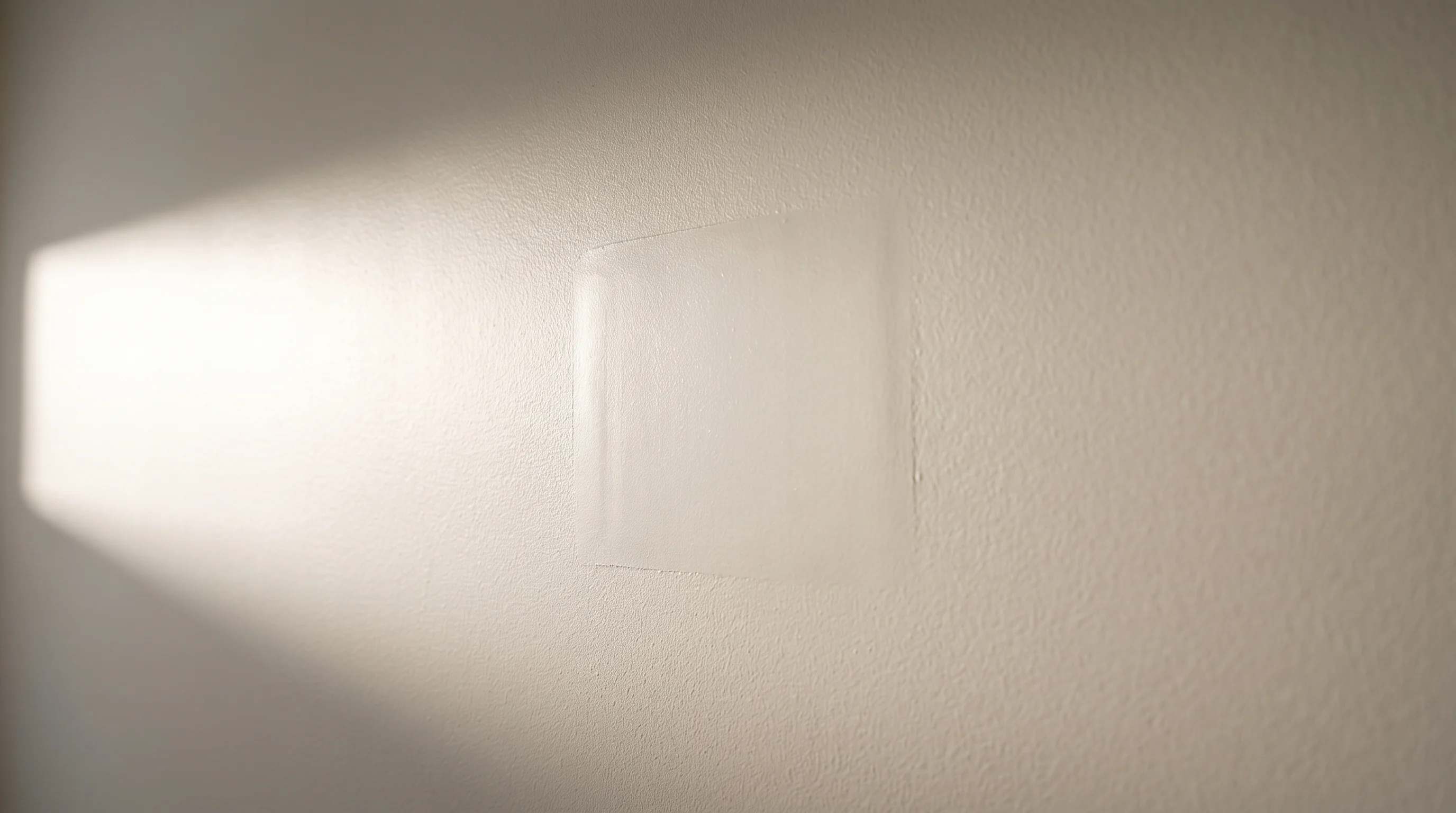
Surface condition should drive your finish choice before you open a can. Satin amplifies imperfections, catching every ding, patch, or uneven joint-compound line under light. If your walls have repairs, cracks, or texture inconsistency, eggshell is safer; its light-scattering behavior reduces shadow contrast and makes flaws less visible.
Run a strong raking light across your walls before committing. Hold a work light close to the surface, angled parallel to the wall, and any bump, ridge, or patch casts a shadow. If you see significant imperfections, either skim-coat and sand or select eggshell. Satin will not hide them; it will draw attention to them.
Essential Equipment and Materials for Painting Interior Walls
Roller Selection
Roller nap affects how each finish applies. On smooth drywall, a 3/8-inch nap delivers even coverage for both finishes without adding texture. On eggshell, moderate stipple blends in because the lower sheen masks it; on satin, too much nap reflects light unevenly. Use a quality woven cover for satin and back-roll each section before the paint flashes.
Paint Selection and Finish Consistency Across Brands
Not all eggshells are alike, and not all satins are alike. Sheen varies between manufacturers because gloss agents, resins, and particle sizes differ. A high-end eggshell from one brand may sit closer to satin than a budget satin from another, so when appearance consistency matters, stay within a single product line. Benjamin Moore Aura and Regal Select lines offer consistent sheen levels: the eggshell reads as eggshell and the satin as satin in tested lighting.
Always buy sample pots and paint a 12-by-12-inch test area on the actual wall. Let samples dry at least 24 hours, then view them in morning, midday, and evening light. Sheen changes with lighting angle, and what looked correct in the store can read differently on your wall.
Other Materials You Will Need
- Quality angled brush, 2.5-inch minimum, for cutting in at ceilings, trim, and corners
- Roller frame and extension pole for wall and ceiling coverage
- Roller tray and liners
- Canvas drop cloths (heavier and more slip-resistant than plastic sheeting)
- Painter's tape rated for the surface (delicate tape for fresh paint on trim; standard tape for bare or primed surfaces)
- Primer for the substrate (PVA primer for new drywall; stain-blocking primer for repaired or stain-prone areas)
- 220-grit sandpaper or sanding sponges for smoothing repairs and scuffing glossy surfaces before repainting
- Tack cloth or damp microfiber wipe for removing dust before painting
- Paint stir sticks and a bucket with a bucket screen for larger jobs
If lining up the right roller covers, primers, and paint for a multi-room project is where planning gets complicated, your local Ace Hardware Painting Services office can scope the full project and take that coordination off your plate. Get an Estimate today.
Step-by-Step Interior Paint Finish Process
Step 1: Prepare the Surface Thoroughly
Preparation determines how the finish performs over time. Wash walls with a mild degreaser to remove grease, dust, and cooking or hand-oil residue; in kitchens this is non-negotiable, since grease prevents adhesion. Fill holes and cracks with spackling compound, then sand smooth with 120-grit and a final 220-grit pass. If the existing surface is semi-gloss or gloss, scuff it lightly with 220-grit before priming, since a glossy substrate does not give either finish adequate tooth.
Step 2: Prime the Surface
Prime bare drywall with PVA primer to seal the porous paper face. Prime patched areas with a stain-blocking primer even if the spackling looks dry; unprimed patches absorb paint unevenly and create flat, dull spots called flashing, more visible in satin. Allow primer to dry per the manufacturer's cure window, typically one to two hours for latex primers, before applying finish paint.
Step 3: Cut In at Edges
Load an angled brush and cut in a band about two inches wide at ceilings, corners, trim edges, and outlet cutouts. Work in four- to six-foot sections and move directly into rolling each while the cut-in edge is still wet. Maintaining a wet edge between brushed and rolled areas prevents lap marks, which are more visible in satin because the reflective surface shows the texture difference where the edges meet.
Step 4: Roll in Consistent Sections
Work in floor-to-ceiling sections roughly the width of a door. Load the roller fully but without drip. Apply paint in a W or M pattern, then back-roll with light pressure in straight vertical passes to even out the film. Back-rolling is especially valuable with satin, reducing visible roller texture. Keep a wet edge across the wall; do not stop mid-wall, since the dried edge shows as a ridge in the finished satin surface.
Step 5: Allow Full Dry and Cure Time Before Second Coat
Dry time and cure time differ. Latex eggshell and satin typically feel dry within one to two hours and accept a second coat after two to four hours in normal conditions. Full cure, the point at which the film reaches its rated hardness and washability, takes 14 to 30 days depending on product and environment. Do not scrub or wash walls aggressively until the cure window passes; wiping too soon can permanently mar the surface because the film has not yet hardened.
Step 6: Evaluate and Apply a Second Coat
After the first coat dries, view the wall under raking light for thin spots, missed edges, and uneven texture. Apply a second full coat with the same cut-in-then-roll sequence. Two coats are standard for both finishes on properly primed surfaces; skipping the second leaves the undertone exposed and produces uneven sheen, particularly visible on satin under side lighting.
Choosing the Right Finish for Each Room
Room-by-Room Application Guide
The best finish follows a simple logic: match sheen to the mix of traffic, moisture, and aesthetic priority. High traffic plus moisture points toward satin; low traffic plus softness points toward eggshell. Most homes use both.
Kitchen and Bathroom: Satin for Moisture and Cleanliness
Kitchens and bathrooms produce steam, splatter, and surface contact no other rooms replicate. Cooking grease settles on walls and requires scrubbing; bathroom walls face daily humidity cycles and the occasional splash near the shower or sink. Satin holds up to repeated wiping with damp cloths and mild cleaners without breaking down. Eggshell tolerates some cleaning but softens faster under moisture and shows wear sooner around sinks and stoves. For cabinets and trim in these rooms, semi-gloss or satin is standard, since the harder film handles contact far better.
Is eggshell or satin better for wood? On wood, satin is the better choice in most interior applications because its harder film resists nicks, moisture absorption, and everyday wear on trim, doors, and furniture. Eggshell suits decorative surfaces with minimal contact, but satin's durability advantage on wood is substantial in any room that sees regular use.
Bedrooms and Living Spaces: Eggshell for Aesthetics and Coverage
Bedrooms, living rooms, and dining rooms lack the moisture and cleaning frequency of kitchens and bathrooms, so eggshell's lower durability is a reasonable trade for its softer light behavior. Eggshell produces walls that recede visually, letting furniture, artwork, and textiles read as the focus. In rooms with older plaster, visible patches, or settling texture, it distributes light softly and reduces contrast between smooth and irregular areas. Satin in a large living room with textured walls can look inconsistent from a distance.
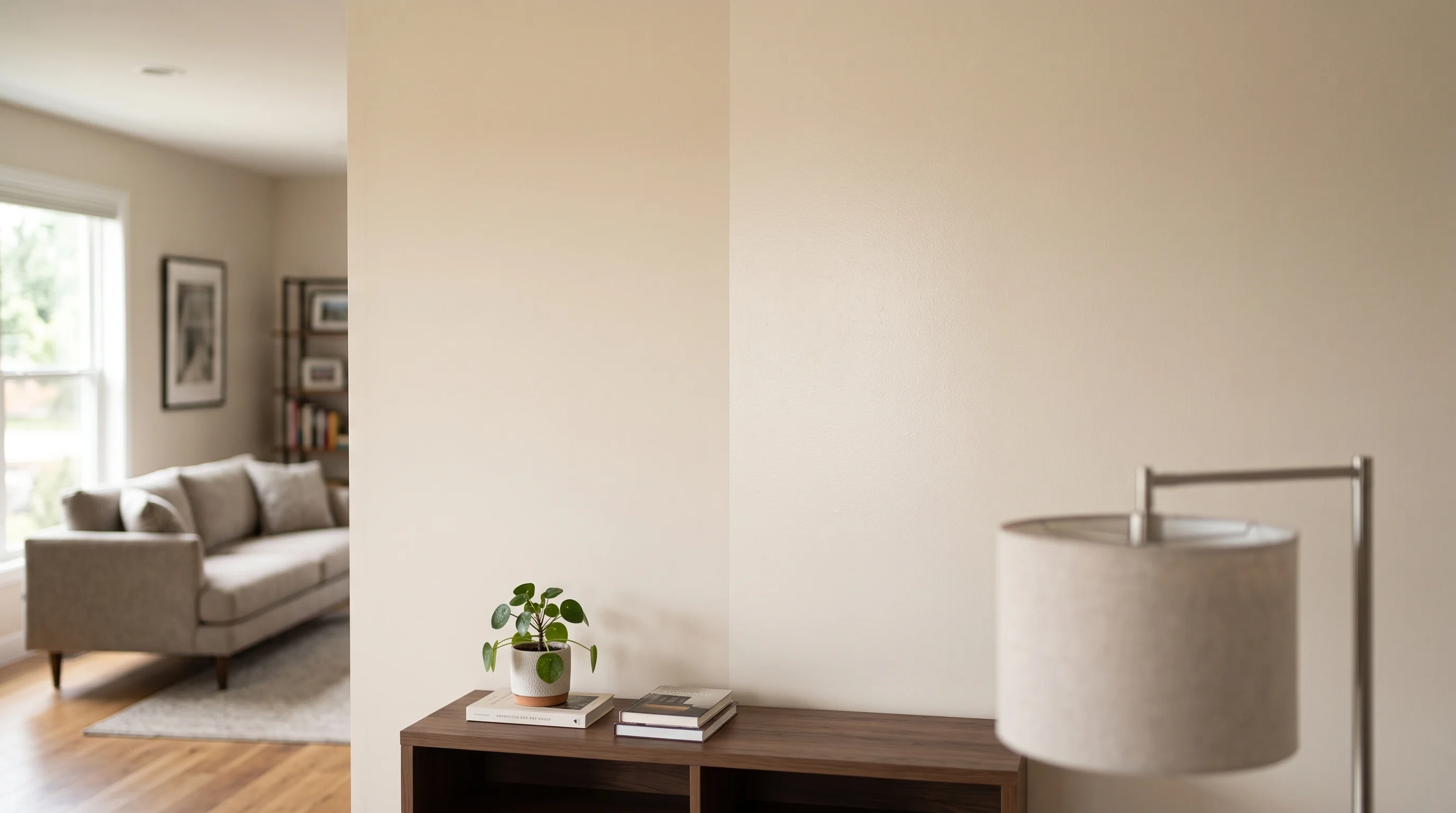
Eggshell vs. Satin at a Glance: Right-Call Decision Guide
Sometimes the right finish is obvious. Other times the choice sits in the middle and needs explicit criteria to tip it.
Choose eggshell when:
- The room sees low to moderate traffic and minimal food or liquid exposure
- Walls have visible repairs, patches, or texture variation
- The design goal is visual softness and walls that recede behind furnishings
- You are painting a bedroom, formal living room, or dining room where aesthetics matter more than wipe-down durability
- The lighting is strong and directional and a glossier surface would create glare
Choose satin when:
- The room produces moisture, steam, grease, or high cleaning frequency (kitchen, bathroom, laundry room)
- Children or pets share the space and walls get touched, bumped, and wiped regularly
- The wall surface is smooth and well-prepared with no significant imperfections to hide
- The finish needs to handle repeated cleaning without losing color or integrity
- You are painting trim, doors, or wood surfaces where a harder film provides meaningful protection
When NOT to Use Eggshell: Specific Scenarios and Trade-Offs
When should you not use eggshell paint? Eggshell is a poor choice in four situations: high-traffic walls that need frequent scrubbing; kitchens and bathrooms with direct moisture or grease; surfaces with poor prep or extensive damage that satin would amplify but eggshell cannot fully conceal; and any exterior application, where eggshell lacks the durability and weather resistance for outdoor use. In each, satin or a higher-sheen finish performs meaningfully better.
High-traffic hallways, mudrooms, and entryways see contact that erodes eggshell faster than most homeowners expect. A hallway wall that children drag their hands along, or a mudroom wall bumped by bags and gear, will show wear in eggshell within a year or two. Satin's harder film resists this abrasion far better.
In spaces with consistent humidity, eggshell's lower film hardness lets moisture penetrate more readily. A poorly ventilated bathroom in eggshell may peel at the tub-surround seams or around the exhaust fan well before satin would. Adequate ventilation extends either finish, but satin starts from a stronger position in high humidity.
For exteriors, neither interior eggshell nor interior satin is appropriate. Exterior paints are engineered to handle UV degradation, thermal expansion, and direct weather; interior finishes applied outside fail prematurely through chalking, peeling, and sheen loss. Use exterior-specific lines formulated for your climate and substrate, and consult the product data sheet for the right sheen.
Special Considerations for Challenging Surfaces
Older homes with plaster present a specific challenge. Plaster expands and contracts with seasonal humidity, and surface cracks are common. On plaster, eggshell's more flexible film and light-scattering behavior make it the standard recommendation, since satin amplifies hairline cracks as the seasons shift. If the plaster has been skim-coated and is smooth and stable, satin becomes viable, but the default on vintage plaster is eggshell.
Rooms previously painted in semi-gloss or gloss require scuff sanding before either finish will adhere properly; without it, both peel or chip at the edges over time. A bonding primer after scuff sanding and before the finish coat gives both the best chance of long-term adhesion.
Open-concept floor plans where an eggshell living room transitions to a satin kitchen require attention to where the visual break occurs. Position the finish change at a natural boundary: an inside corner, a door frame, or a ceiling break. Avoid letting satin and eggshell meet on the same continuous wall plane, which creates a visible sheen transition. Planning this before you begin prevents an awkward line.
If the surface complexity of your project, whether plaster repairs, a difficult sheen transition, or cabinets that need a harder film than wall paint, is making the scope feel large, cabinet and interior surface painting from Ace Hardware Painting Services handles the prep, finish selection, and application. Schedule Today.
Maintenance and Long-Term Care
How long do eggshell and satin finishes last before repainting? Both typically last seven to ten years in moderate-traffic interior areas before the film shows enough wear, fading, or burnishing to warrant repainting. High-traffic areas, particularly kitchens in eggshell, may need attention in four to five years. Satin in the same kitchen lasts longer because the harder film resists burnishing from repeated wiping.
Long-term care basics for both finishes:
- Wait at least 30 days after painting before washing walls with anything beyond a dry microfiber cloth, even if the surface feels dry within hours.
- Use a damp cloth with mild dish soap for routine spot cleaning on both finishes; avoid abrasive cleaners or scouring pads.
- Dry the surface after washing rather than letting water sit; pooled water at the base of a wall can soften either film.
- Touch up scuffs and marks with the original paint. Store a labeled quart of the original formula in a climate-controlled space for this purpose.
- Touch-ups on satin are more forgiving than on eggshell; the reflective surface blends the repair better, while eggshell touch-ups in aged paint can show a different sheen than the surrounding paint.
- Re-prime touched-up areas before applying finish paint if the underlying surface was bare or damaged; skipping primer produces the flashing spots noted earlier.
- In high-cleaning rooms, plan repainting on a schedule rather than waiting for visible failure. Repainting a kitchen every five to seven years extends the life of the substrate.
Things to Consider Before You Start
Honest questions worth answering before you open a can:
- How much surface prep am I willing to do? Satin needs a smooth surface to look its best. If you will not skim-coat and sand, eggshell is more forgiving of imperfect walls.
- How often do these walls get wiped down? If the answer is several times a week, satin pays back the sheen difference with longer finish life.
- Am I painting trim and walls the same color? If so, consider satin on the trim and eggshell on the walls. The sheen difference reads well in person and defines the woodwork.
- Do I have the right primer for the existing surface? An unprepared surface, whether bare drywall, repaired plaster, or previously glossy paint, causes problems regardless of the finish coat. Primer is not optional on challenging substrates.
- Am I realistic about my timeline? Satin walls not allowed to fully dry between coats show lap marks and uneven sheen. Rushing satin produces worse results than rushing eggshell because the reflective finish reveals inconsistency.
- Do I want to repaint this room in three years or hold it for ten? The right finish for a quick refresh on a rental differs from the finish for a kitchen you plan to keep for a decade. Factor your timeline in alongside the room's function.
If the project scope, the surface condition, or the precision a good satin application requires feels outside what you want to take on yourself, that is an honest assessment of where professional work creates real value.
Why Homeowners Bring in Ace Hardware Painting Services
Our crews work with both eggshell and satin finishes on interior projects across every room type, and the reasons homeowners hand off the project come back to a few practical realities:
- We use premium Benjamin Moore paints and stains as our standard. Benjamin Moore's eggshell and satin formulations sit reliably within their labeled sheen ranges, so the finish you approve in a sample is the finish that goes on the wall at scale.
- Color consultation and paint samples are included. Choosing between eggshell and satin is one decision; choosing the right color in your lighting is another. Our color consultation addresses both at once.
- Our workmanship guarantee covers the finished result. If the sheen reads uneven or a cut-in line is visible after the job, we address it. You do not absorb the cost of a redo.
- No sprayer, roller, primer, or specialty tool to rent, purchase, or return. The right equipment for the right surface is part of what we bring to every project.
- Our crews are background-checked. The people painting your home are vetted before they arrive.
- We work on predictable weekday timelines. Multi-room projects that would stretch over several weekends for a homeowner alone typically complete in one to three days for a professional crew.
- Cleanup is included. Drop cloths, tape, and the entire job site are cleaned before we leave. You do not come home to a room staged for painting still needing to be restored.
- The Ace Hardware name stands behind the work. The service standard and trustworthiness that make Ace Hardware a household name in retail extend directly into the painting service.
Find your local Ace Hardware Painting Services office to get an estimate on your interior painting project. Call Today.
Frequently Asked Questions
What is the actual difference between eggshell and satin paint?
Eggshell produces a low-luster finish with light reflectance of roughly 10 to 25 percent, comparable to an actual eggshell. Satin sits above it at 25 to 35 percent, producing a soft but visible sheen. Satin is harder when cured and more resistant to scrubbing; eggshell is softer and more forgiving of imperfections.
Is eggshell or satin better for a living room?
Eggshell is the standard choice for living rooms, which see moderate traffic without the moisture or grease of kitchens and bathrooms. Its softer sheen makes furnishings and artwork the focal point. If the walls are in excellent condition, satin is also viable, particularly if the room gets strong directional light.
Can you use satin paint in a bedroom?
Yes, though most designers and painters default to eggshell for bedroom walls. Bedrooms see low cleaning frequency, making eggshell's durability trade-off a non-issue. Satin in a bedroom with large windows or strong overhead lighting can feel more reflective than expected. If the walls are smooth, satin is fine; if they have repairs or texture, eggshell is more forgiving.
When should you not use eggshell paint?
Avoid eggshell in high-traffic rooms where walls need frequent scrubbing, in kitchens and bathrooms with direct moisture or grease, on surfaces where thorough prep was not possible, and in any exterior application. Eggshell's lower film hardness and susceptibility to moisture make it the wrong choice in these scenarios; satin or a higher-sheen finish performs meaningfully better.
Does eggshell or satin hide imperfections better?
Eggshell hides imperfections better because of how each finish interacts with light. A lower-sheen surface scatters light, reducing the shadow contrast that makes bumps, patches, and irregularities visible. Satin reflects at a more consistent angle, throwing surface variation into relief under raking or directional light. If your walls have repairs or texture inconsistencies, eggshell is the practical choice for concealing them.
How do you touch up eggshell or satin paint after the finish has aged?
Touch-ups on aged paint are easier on satin than eggshell. Satin's reflective surface blends a fresh application in more smoothly because its sheen matches the surrounding film well enough to avoid a flat spot. Eggshell touch-ups can show a different sheen because fresh paint cures to a different level than settled paint. In both cases, use the original formula, feather the edges, and allow the full cure before assessing. If a touch-up remains visible, painting the full wall corner to corner produces a consistent result.