
What Is the Difference Between Interior and Exterior Painting?
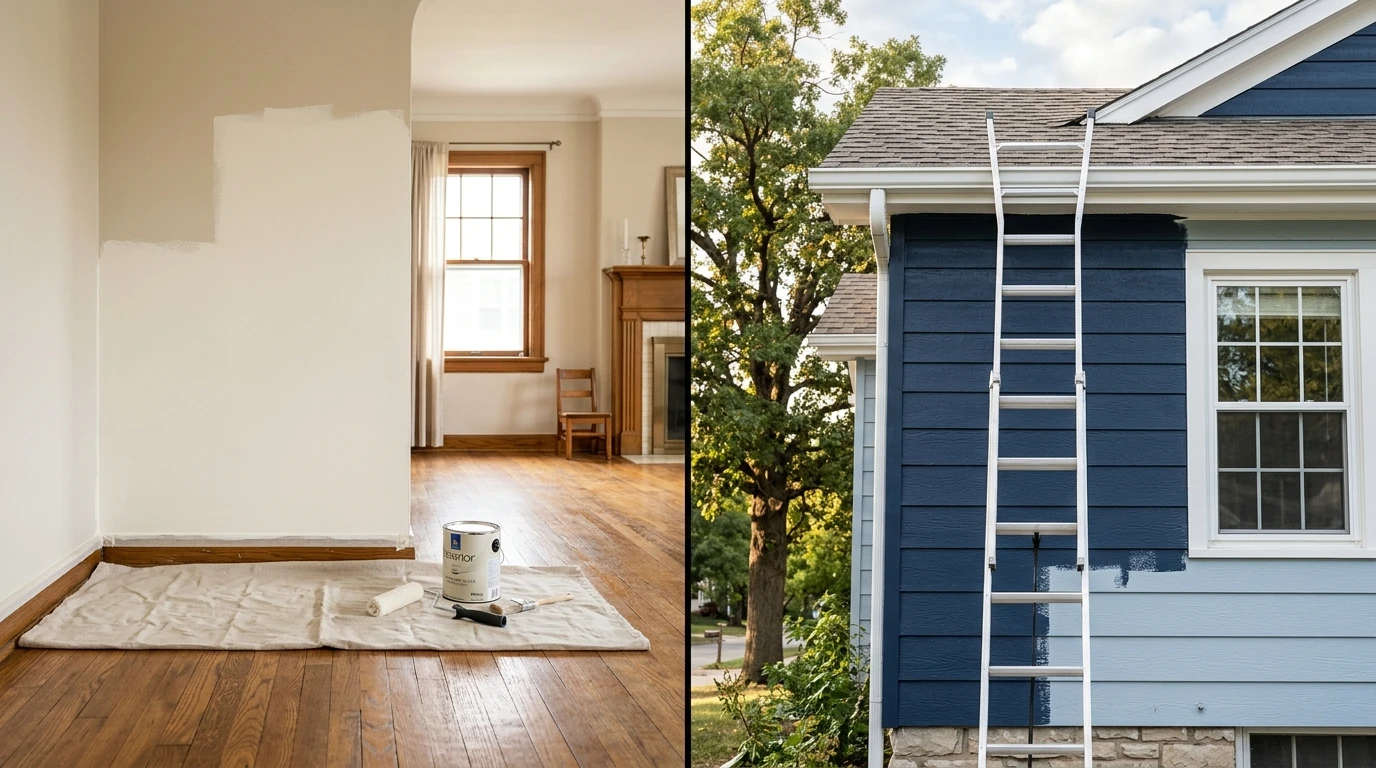
The difference between interior and exterior painting is real, and it matters more than most people expect. Interior and exterior paints are built for completely different environments, and using the wrong one leads to peeling, fading, and surfaces that need to be repainted way ahead of schedule. Homeowners in Lenexa, KS run into this question all the time when planning a refresh, tackling a new project, or standing in the paint aisle trying to figure out which can to grab. The good news is that once you understand how these two types of paint are actually made, the right choice becomes pretty straightforward.
Chemical Composition: How Resins and Additives Create Different Paint Properties
Every paint starts with four basic ingredients: pigments for color, a binder that holds the film together, a liquid carrier that evaporates as the paint dries, and additives that shape how the paint performs. The binder, also called the resin, is where interior and exterior paints part ways.
Interior paints use rigid acrylic or vinyl-acrylic resins that cure into a firm, hard film. That firmness is actually what you want indoors. Interior walls do not flex or get blasted by sunlight, so a rigid film cleans easily, holds up to scrubbing, and keeps its sheen over time. VOC levels are kept low because the paint cures in an enclosed space where the people living there are breathing the air.
Exterior paints use 100% acrylic resins or alkyd-modified acrylic blends that stay flexible after curing. That flexibility is not a bonus feature; it is a requirement. Wood siding, stucco, and fiber cement expand in the summer heat and contract when temperatures drop. A rigid paint film simply cracks and peels under that kind of stress. Exterior formulations also include UV stabilizers to slow sun damage, along with mildewcides that resist mold and mildew on shaded or damp surfaces. Those additives are not in interior paints because they are not needed indoors and are not appropriate for enclosed living spaces.
- Interior resins cure rigid, which supports washability and scrub resistance on walls and trim.
- Exterior resins cure flexible, which lets the paint film move with the substrate through seasonal temperature swings.
- UV stabilizers in exterior paint slow color fade and binder breakdown from direct sun exposure.
- Mildewcides in exterior paint prevent mold growth on north-facing and shaded surfaces.
- Low-VOC chemistry in interior paints keeps indoor air quality healthy during and after the project.
Interior Paint: Built for Life Inside Your Home
Inside your home, conditions are relatively stable. Temperature and humidity stay in a reasonable range, and the walls never face direct rain or UV radiation. So interior paint is engineered around a different set of priorities: how easy is it to clean, how well does it resist stains, and how does it look across different lighting conditions?
Scrubbable interior formulations let you wipe down kitchen walls, clean up handprints in hallways, and maintain bathroom surfaces without wearing through the finish. Stain resistance keeps common household spills from soaking in permanently. Finish options run from flat and matte for low-traffic rooms to eggshell, satin, and semi-gloss for surfaces that see moisture or frequent contact. Each sheen reflects a slightly different resin-to-pigment ratio, which affects both the look and how well you can clean the surface.
Matching the paint to the room makes a real difference. Bathrooms benefit from moisture-tolerant formulations. Kitchens do better with grease-resistant sheens. Bedrooms and living areas are where low-VOC content and smooth, consistent color really shine. For a full refresh across multiple rooms, a properly scoped interior painting project brings all of those decisions together in a way that makes the finished result feel cohesive.
Exterior Paint: Your Home's First Line of Defense
Exterior paint has a tougher job. It sits between the outside world and your home's structure, dealing with UV radiation, rain, humidity, freezing temperatures, and biological growth all in the same year. Every property of a good exterior formulation traces back to one of those threats.
The flexible resin system handles the expansion and contraction cycle. Moisture resistance comes from formulations that repel water at the surface while still allowing vapor to move through, which prevents the blistering that happens when trapped moisture has nowhere to go. UV protection comes from stabilizers in the binder combined with fade-resistant pigments, which is especially important with deeper colors where the pigments are more vulnerable to sun damage over time.
Exterior paint also takes longer to fully cure than interior paint. The same chemistry that makes it durable extends the dry time, particularly when humidity is high. Cold temperatures are a real concern too. Application below 50 degrees Fahrenheit prevents the film from forming properly, which leads to adhesion problems down the road.
- Only apply exterior paint when surface temperatures are above 50 degrees Fahrenheit.
- Avoid scheduling exterior work when rain is expected within 24 hours of any coat.
- West-facing surfaces in afternoon sun can dry too fast, which traps solvent and weakens adhesion.
- Allow at least 30 days of full cure before new exterior paint faces freezing conditions.
A well-planned full home exterior painting project accounts for all of these conditions before the first coat goes on, not after.
What Happens When You Use the Wrong Paint Type
Using interior paint on an exterior surface is one of the most common and costly painting mistakes homeowners make. The failure does not take long to show up. Interior resins cannot flex with substrate movement, so the film starts cracking within one to two seasons. Those cracks let moisture in behind the film, and blistering and peeling follow. Without UV stabilizers, the color fades noticeably within the first year.
Going the other direction creates a different set of problems. Exterior paint contains mildewcides and additives that are designed to off-gas in open-air conditions. Used inside, they raise air quality concerns in an enclosed space. The paint may also stay tacky longer in a low-ventilation environment, attracting dust and producing a finish that never quite looks right.
Here is the practical reality of interior-on-exterior failure: peeling typically becomes visible within 12 to 24 months. On wood siding with regular moisture cycling, full delamination can happen within three years. Before any new paint can go on, the failed film has to come off through stripping or sanding. That means significantly more labor and time than the original project would have required if the right product had been used from the start.
How Application Technique Changes Between Interior and Exterior Work
The physical process of painting shifts depending on where the work happens. Surface preparation, environmental timing, and tool choices all look a little different indoors versus outside.
Interior prep centers on cleaning surfaces, patching holes and cracks, and scuffing glossy areas so the new paint has something to grip. Good ventilation speeds up dry times and clears the air. Roller nap follows surface texture: smooth drywall gets a shorter nap, textured ceilings benefit from a thicker pile. Cutting in at trim lines takes patience and a quality angled brush, but it is what separates a clean result from a rushed one.
Exterior prep asks more of you. Power washing removes chalking, mildew, and loose material before any coating goes down. Failed caulk around windows and trim needs to come out and get replaced. Bare wood spots exposed by scraping or sanding benefit from spot priming. And weather matters in a way it simply does not indoors. Temperature, humidity, dew point, and what the forecast says for the next 24 hours all factor into whether a given day is the right day to paint.
Primer Selection and Paint System Compatibility
A primer and a topcoat work together as a system. If you mix a primer built for one environment with a topcoat formulated for the other, you create gaps in the system that reduce overall performance even if both products are good on their own.
Interior Paint and Primer Combinations
Interior primers are designed to seal porous surfaces, block stains, and give the topcoat a uniform base to grab onto. Drywall primers seal the paper face and even out how the surface absorbs paint. Stain-blocking primers stop tannin bleed from wood and prevent water or smoke stains from showing through. Bonding primers help paint stick to slick surfaces like tile or previously painted gloss finishes. When the primer and topcoat are both built for interior use, their dry times, VOC levels, and film characteristics are designed to work together.
Exterior Paint System Requirements
Exterior primers carry weather-sealing properties that interior versions simply do not have. Oil-based or alkyd primers are often the right call for bare wood because they penetrate deeply and resist tannin bleed from species like cedar and redwood. Masonry primers address the alkalinity of fresh concrete or stucco, which can cause paint films to break down if you skip that step. Whatever exterior primer you choose, it should have a recoat window that works with your exterior topcoat. A primer that stays soft under an exterior topcoat can cause adhesion loss when the surface starts expanding and contracting with the seasons.
How Your Local Climate Shapes the Choice
Paint formulations are not one-size-fits-all even within the interior and exterior categories. Where you live influences which specific products hold up over time. Lenexa, KS sees significant seasonal swings, with hot and humid summers and cold winters. Those conditions put real demands on exterior paint systems. A flexible, 100% acrylic exterior formulation handles the expansion-contraction cycle more reliably than a product with less flexible binder chemistry.
Summer humidity in the Lenexa, KS area also raises the stakes for mildew resistance on shaded or north-facing exterior surfaces. Properties with mature trees overhead tend to keep siding and trim damp longer after rain, which makes mildewcide content in the paint more than a footnote in the product spec. Inside, standard residential conditions apply, but kitchens and bathrooms still benefit from moisture-tolerant formulations in sheens that can be wiped down regularly without wearing out.
The Real Cost of Choosing the Wrong Product
Picking the right paint type up front is one of the simplest ways to protect your project in a painting project. Interior paint applied outside fails in one to three years and has to be fully removed before repainting, turning a straightforward job into a much bigger one. Exterior paint applied inside introduces unnecessary chemical exposure and delivers a finish that does not perform as well as a purpose-built interior product would.
When the right product goes on a properly prepared surface, you get the full service life the manufacturer designed for. Quality exterior acrylics can perform for 10 to 15 years before repainting becomes necessary. Interior paints in well-maintained spaces hold their finish for 5 to 10 years depending on traffic and cleaning habits. Those timelines fall apart when the wrong product is applied to the wrong surface. The additional material and labor required to fix a failed coating always adds up to more than the difference between a properly specified product and a misapplied one.
Why Choose Westlake Ace Hardware Painting Services Kansas City Metro
At Westlake Ace Hardware Painting Services Kansas City Metro, we know that a painting project can feel overwhelming before it even starts. That is exactly why we handle the decisions that make homeowners nervous: which product is right for which surface, which primer pairs with which topcoat, and how to schedule exterior work around the weather. We work to Benjamin Moore standards on every job, so the paints and stains going on your walls and siding are formulated to perform for the long haul. Color consultation and physical color samples are included on residential projects, so you feel confident about your color choices before anything is applied. Our crews are background-checked W-2 employees, not subcontractors, which means you get consistent, accountable work from people who show up as professionals. Whether the project is a single interior room or a complete exterior repaint, we match the right materials to your surfaces and your environment from day one. When you are ready to get started, Get an Estimate from our Kansas City Metro office.
FAQ
Can I use exterior paint inside if I want a tougher finish?
It is not a good idea. The additives that make exterior paint tough outdoors, including mildewcides and UV stabilizers, are formulated to off-gas in open air. In an enclosed room, they raise air quality concerns that you simply do not face with interior paint. If you need a durable interior finish, there are purpose-built interior formulations in higher sheens that deliver excellent scrub resistance without the air quality tradeoff.
How long does exterior paint last compared to interior paint?
A quality exterior paint system on a well-prepared surface typically lasts 10 to 15 years before repainting is needed. Interior paint in normal living areas can hold up for 5 to 10 years depending on how much traffic the room sees and how often surfaces get cleaned. Both timelines assume the right product was used for the environment and that the surface was properly prepared beforehand.
Why does exterior paint tend to cost more than interior paint?
Exterior formulations require more complex chemistry. UV stabilizers, flexible resin systems, mildewcides, and weather-resistant additives all add to the raw material content of the product. Interior paints do not need those components, which keeps the formulation simpler and the price lower. The higher cost of exterior paint reflects what it actually takes to hold up outdoors year after year.
Do I always need to prime before painting?
In most cases, yes. Bare drywall, raw wood, masonry, and previously stained surfaces all perform better with a primer matched to the topcoat chemistry. Using a primer and topcoat designed for the same environment ensures the system works the way it was intended. Skipping primer on porous or stained surfaces often leads to uneven sheen, bleed-through, and adhesion that does not hold up over time.
Can I apply exterior paint over existing interior paint on a surface moving outdoors?
This is a situation where taking a shortcut usually creates more work later. The interior paint film underneath may not bond well enough with an exterior topcoat to survive thermal stress over multiple seasons. The safer path is to remove or sand the interior coating down to a stable base before applying an exterior primer and topcoat system. Starting on a solid, compatible foundation gives the new exterior system the strongest chance of reaching its full service life.