
Is Professional Cabinet Painting Worth the Cost?
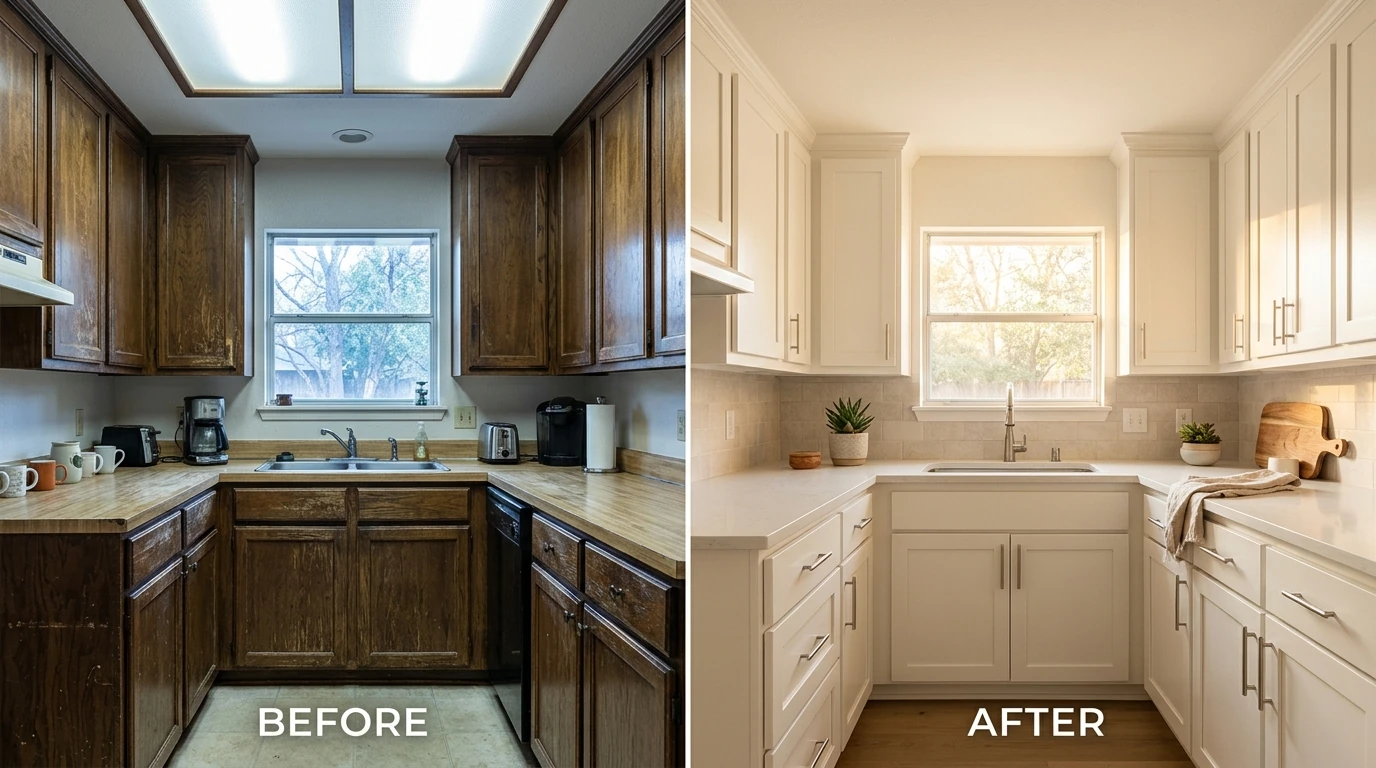
For most homeowners in Austin, TX, the answer to whether professional cabinet painting is worth the cost is yes. If your cabinets are structurally sound and the kitchen layout works well, a professional finish can transform how your kitchen looks and holds up over time. The key is understanding what professional cabinet painting actually involves, how it differs from a DIY approach, and when it makes more sense than replacing cabinets entirely. Once you see what goes into the process, the value becomes a lot clearer.
Professional vs DIY Cabinet Painting: Technical Performance Differences
The biggest difference between professional and DIY cabinet painting is not just skill. It is preparation and equipment. And those two things together are what determine whether a finish looks great for years or starts showing wear within months.
Professional crews degrease cabinet surfaces with commercial cleaners that cut through layers of cooking oil and residue that everyday household products simply do not remove. After that, they scuff-sand with controlled grit sequences and apply a bonding primer matched to your specific cabinet material. That combination of mechanical and chemical adhesion is what makes the finish hold up through daily use, moisture from cooking, and regular cleaning.
The other major difference is spray equipment. Professional cabinet painters use HVLP spray systems that lay down thin, even finish coats with no brush marks or roller texture. If you have ever looked at a freshly painted kitchen and thought the cabinets looked almost factory-finished, that smoothness comes from spray application. Brush-and-roll painting can work fine on walls, but on cabinet doors and drawer fronts, the texture difference is noticeable.
Professional-grade cabinet coatings also cure to a harder film than most retail paints. That hardness matters most at edges and corners, where daily contact happens and where chips typically start. The right prep, the right equipment, and the right product together are what give professionally painted cabinets a reliable three-to-seven-year performance window.
When Professional Cabinet Painting Makes Financial Sense
Professional cabinet painting makes the most sense when the cabinets themselves are in good shape but the kitchen needs a visual refresh. If the boxes are solid, the doors hang correctly, and the storage layout works for your household, the only real problem is how it looks. Paint solves that without tearing anything out.
Here are some clear signals that professional cabinet painting is likely the right path for your kitchen.
- Cabinet boxes and door frames are free of warping, water damage, or structural delamination.
- The kitchen layout works well and no reconfiguration is needed.
- You want a specific color or finish that modernizes the kitchen without a full renovation.
- You are preparing the home for sale and the kitchen needs a refresh on a reasonable timeline.
- Cabinet door profiles and hardware are in good condition or will be updated alongside the paint.
Homeowners in Austin, TX who are preparing a home for resale or updating a kitchen before a major life change often find that professional painting gives them the visual reset they need without committing to months of renovation work. The cost of professional cabinet painting is typically a fraction of what full replacement runs, and the finished result photographs well, holds up to daily use, and can meaningfully improve the perceived quality of the kitchen.
If you are not sure whether your cabinets are a good fit for painting, a cabinet painting consultation can give you an honest answer before any commitment is made.
Cabinet Material Compatibility and Paint Performance
One thing that does not get talked about enough is how much your cabinet material affects the final result. Wood, MDF, and thermofoil all respond differently to paint, and knowing which one you have matters before the project starts.
Solid wood and plywood-based cabinets are the most receptive. They accept primer well, hold up to light sanding between coats, and stay relatively stable as indoor humidity shifts with the seasons. That stability helps prevent paint from cracking at joints and panel edges over time.
MDF cabinet doors are common in mid-range kitchens and paint beautifully when prepared correctly. The edges of MDF are more absorbent than the face, so they need extra primer to prevent uneven sheen. A professional crew catches this before the first coat goes on rather than discovering it halfway through the project.
Thermofoil and laminate surfaces are a different story. They can be painted with the right adhesion primer, but if the foil wrapping is already peeling or lifting at the edges, paint will not fix that underlying problem. Part of what you are paying for with professional cabinet painting is an honest upfront assessment of what your material can realistically deliver as a finished result.
Professional Cabinet Painting Process and Timeline
Knowing what actually happens during a professional cabinet painting project makes it much easier to plan around and understand why the timeline is what it is. Here is how the process typically unfolds from start to finish.
- Remove all cabinet doors, drawer fronts, and hardware before any surface preparation begins.
- Clean and degrease all surfaces thoroughly to remove cooking residue and oils.
- Sand all surfaces with appropriate grit sequences to create adhesion for primer.
- Apply a bonding primer formulated for the specific cabinet material and allow full cure time.
- Lightly sand between primer and topcoat layers to smooth any raised grain or texture.
- Apply finish coats using HVLP spray equipment, typically in a spray tent or controlled area for doors and drawer fronts.
- Allow adequate cure time between coats and before reinstallation.
- Reinstall doors, drawer fronts, and hardware with adjusted hinges to ensure proper alignment on the refreshed surface.
Most standard kitchen projects run three to five working days from start to reinstallation. Larger kitchens or those needing extra prep may take a day or two longer. The drying and curing steps cannot be rushed without compromising the hardness of the final surface, so that time is built in for a reason.
During the project, cabinet boxes generally stay in place so you can still access your refrigerator and countertops. Doors and drawer fronts are removed and processed separately, then reinstalled once the finish has fully cured. It is a much lighter disruption than most homeowners expect going in. For more detail on what a kitchen painting project involves, a quick consultation covers your specific layout and timeline.
Durability and Longevity Expectations
When cabinets are properly prepared and finished with cabinet-grade coatings, professionally painted surfaces routinely hold up for five to seven years before any touch-up is needed. Households with young children or heavy cooking activity may see earlier wear at edges and high-contact areas, but spot touch-up on professionally painted surfaces is straightforward as long as the original paint formula is on file.
How you care for the surface after the project is finished also makes a real difference in how long it looks great. A few simple habits go a long way.
- Wipe surfaces with a soft damp cloth and skip the abrasive pads or scouring agents that scratch the paint film.
- Let steam from cooking dissipate before wiping cabinet surfaces, since repeated hot-moisture contact can soften paint over time.
- Avoid silicone-based cabinet sprays, which leave a residue that makes future touch-up adhesion difficult.
- Tighten any loose hardware promptly, since repeated contact from loose screws can chip paint at stress points.
Professional work backed by a workmanship guarantee gives you clear recourse if finish failures occur within the warranty window from the application process rather than from wear or maintenance. Before work begins, it is worth asking exactly what the guarantee covers and what the process looks like if something needs attention down the road.
Cabinet Painting vs Replacement Decision Matrix
The choice between painting and replacing cabinets is not complicated once you know what to look for. Painting is the right move when the goal is a visual refresh and the cabinets themselves are structurally sound. Replacement makes sense when the cabinets are failing or the kitchen layout needs to change.
Painting is likely the right choice if any of these apply to your kitchen.
- Cabinet boxes are structurally sound with no water damage, warping, or delamination.
- The interior storage configuration works well for your household.
- You want a visual refresh without the timeline and disruption of a full renovation.
- Your resale timeline is within two to three years and a refreshed kitchen is the primary goal.
Replacement is likely the right choice if any of these apply.
- Cabinet boxes have significant water damage, mold, or structural failure that a fresh coat will not fix.
- The kitchen layout needs reconfiguration or additional cabinet runs.
- You want to change door profiles substantially in ways that go beyond what a paint refresh delivers.
- Cabinet interiors are deteriorating in ways that affect daily function.
If you are genuinely unsure which category your kitchen falls into, a professional assessment is the fastest way to get a clear answer. An honest look at your cabinets before any work begins is part of what good professional cabinet painting service should include.
Why Choose Ace Hardware Painting Services North Austin
At Ace Hardware Painting Services North Austin, we know that a kitchen repaint is a meaningful project and we want the whole experience to feel straightforward and low-stress for you. We start with an honest conversation about whether your cabinets are genuinely good candidates for professional painting, because we would rather tell you the truth upfront than have you unhappy with the result. Every project uses Benjamin Moore coatings, which includes cabinet-specific formulations built for the kind of adhesion and durability a kitchen demands. Color consultation and physical color samples are included on every residential project, so you can see actual paint colors on your own cabinets before committing to a full application. Our background-checked W-2 crew members handle your home with care, and our workmanship guarantee means you have clear recourse if anything falls short of what was promised. If you are weighing professional cabinet painting for your home in the Austin, TX area, we are happy to walk through the project with you. Get an Estimate from Ace Hardware Painting Services North Austin and see what a professional finish can do for your kitchen.
FAQ
How long does professional cabinet painting typically take from start to finish?
Most standard kitchen cabinet painting projects take three to five working days, covering prep, priming, finish coats, curing, and reinstallation. Larger kitchens or those needing extra surface prep may run a bit longer. The curing phases are built into the timeline for a reason, since rushing them affects how hard and durable the finished surface actually is.
How do I know if my cabinets are good candidates for professional painting?
If your cabinet boxes feel solid, the doors hang correctly, and the surface material is not actively peeling or failing, you are probably a good candidate. A professional walkthrough can flag any material-specific concerns, like lifting thermofoil or saturated MDF edges, before any work starts. That upfront honesty is part of what a good professional cabinet painting service should include.
What maintenance does a professionally painted cabinet surface need?
Routine care is simple. Wipe surfaces with a soft damp cloth, skip the abrasive cleaners, and let steam dissipate before wiping directly near the stove. Avoiding silicone-based cabinet sprays keeps the surface ready for easy touch-up if you ever need it. These small habits can add years to the life of your finish.
Does professional cabinet painting disrupt the kitchen during the project?
Less than most homeowners expect. Cabinet boxes stay in place throughout the project, so you can still access your refrigerator, countertops, and appliances. Doors and drawer fronts are removed, finished separately, and reinstalled once cured. There will be some activity in the kitchen during work phases, but daily life stays mostly intact.
What should a professional cabinet painting warranty actually cover?
A solid workmanship guarantee covers application-related failures like peeling, cracking, or adhesion issues that come from the prep or coating process itself, not from physical impact or heavy wear. Before the project starts, ask specifically how long the guarantee lasts and what the process looks like if something needs to be addressed. A contractor who answers that question clearly is one who stands behind their work.