
How Long Does It Take to Paint a Room?
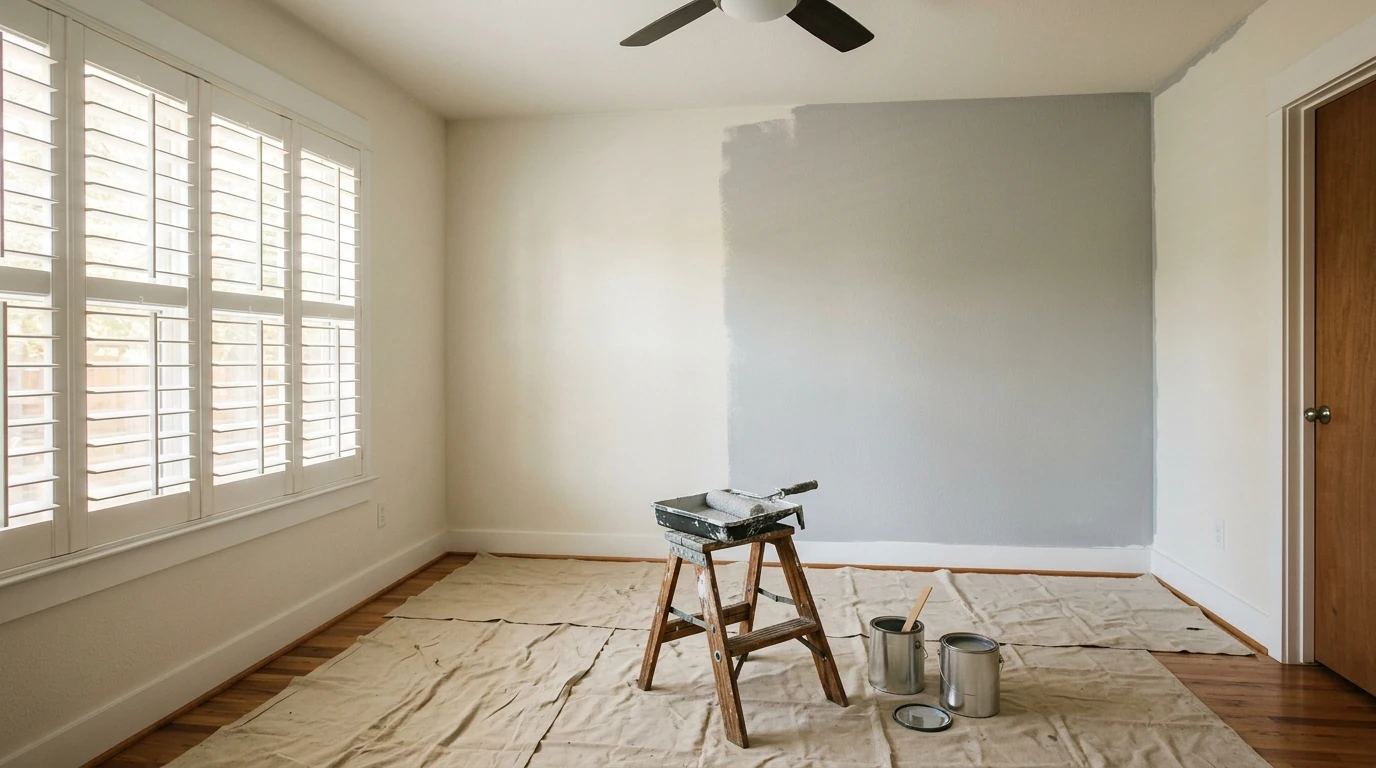
How long does it take to paint a room? The honest answer is that it depends on more than just square footage. Room size, surface condition, paint type, number of coats, and your experience level all play a role in the total time from first tape strip to final cleanup. Homeowners in Austin, TX often find that prep work and drying time catch them off guard, turning a hoped-for one-afternoon project into a two-day job. Getting a clear picture of what actually drives the clock helps you plan with confidence, whether you are rolling paint yourself or bringing in a professional crew.
Standard Room Painting Time by Size and Type
Most rooms fall into predictable time ranges once you account for all phases of the job, not just the time a brush or roller is moving. The figures below assume two coats of paint, a standard ceiling height of 8 to 9 feet, and walls in reasonably good shape. Add 30 to 60 minutes for any patching, and a bit more if primer is needed before you start.
- Small bathroom or closet (40 to 80 sq ft): 3 to 5 hours for a DIYer, 1.5 to 2.5 hours for a professional painter.
- Standard bedroom (120 to 180 sq ft): 5 to 8 hours for a DIYer, 2 to 4 hours for a professional painter.
- Large master bedroom or home office (180 to 250 sq ft): 6 to 10 hours for a DIYer, 3 to 5 hours for a professional painter.
- Living room or open concept area (250 to 400 sq ft): 8 to 14 hours for a DIYer, 4 to 7 hours for a professional painter.
- Kitchen (100 to 200 sq ft of paintable wall surface): 6 to 12 hours for a DIYer due to all the obstacles, 3 to 6 hours for a professional painter.
These ranges cover walls only. Painting the ceiling adds 1 to 3 hours depending on size, and trim work adds another 1 to 2 hours per room. If you are planning a full home interior repaint, multiply the room estimates and build in a little extra time for moving between spaces.
Breaking Down the Painting Process Phase by Phase
The actual painting is only one part of the job. When homeowners feel behind schedule, it is almost always because prep work and drying time were not built into the plan from the start.
Surface Preparation: The Hidden Time Consumer
Prep work often takes as long as painting itself, especially in rooms with any damage or texture. Patching nail holes and small dents takes 15 to 30 minutes per room, but the compound needs to dry before you can sand, which adds another 30 to 60 minutes of wait time. Sanding, wiping down walls, and taping trim and outlets typically runs 45 minutes to 1.5 hours in a standard bedroom. Moving and covering furniture adds another 20 to 40 minutes on top of that. If your walls have a glossy finish, you will need to scuff sand the whole surface before painting, which can easily add an hour to the prep phase alone.
Cutting In, Rolling, and Drying Between Coats
Cutting in along edges and corners takes 30 to 60 minutes per coat in a standard bedroom. Rolling the open wall area runs 20 to 40 minutes per coat. Put those together and one full coat on the walls takes roughly 45 minutes to 1.5 hours. Latex paints typically need 2 to 4 hours of drying time between coats under normal indoor conditions. With two coats, you are looking at a 5 to 6 hour minimum for paint application and drying alone, before prep and cleanup. Oil-based paints need 8 to 24 hours between coats, which almost always pushes a single-room job into a second day.
Cleanup runs 20 to 45 minutes for water-based paints and considerably longer for oil-based products. If you are painting both walls and trim, trim painting adds its own cut-in and drying cycle on top of the wall schedule, so plan accordingly.
How Paint Type and Conditions Affect Your Timeline
Paint type is one of the most overlooked variables when homeowners plan a painting project, and it has a real impact on how long the job takes.
Latex and water-based paints dry to the touch in 1 to 2 hours and are ready for a second coat in 2 to 4 hours. That makes one-day completion very realistic for a single room in good condition. Oil-based paints produce a hard, durable finish that works well on trim and cabinets, but they need 8 to 24 hours between coats. A two-coat oil-based job on trim alone can stretch across two to three days, so factor that in before you choose your product.
The conditions in your home shift those dry times too. High humidity slows evaporation and extends drying, sometimes by 50 percent or more. Low humidity and warm temperatures speed things up but can cause paint to dry too fast at the brush tip, which leaves lap marks. Homes in Austin, TX often run air conditioning during warmer months, which helps keep indoor humidity in a workable range. If you open windows for ventilation and turn the AC off, outdoor humidity can work against you. A portable fan or small dehumidifier improves airflow and helps bring dry times back to what the paint label says to expect.
Professional vs DIY Painting: A Real-World Time Comparison
Professional painters typically finish a room in roughly half the time of a solo DIYer, sometimes faster. That gap comes from three things: familiarity with the process, tools built for speed and efficiency, and the ability to work in pairs where one person cuts in while another rolls.
If you are painting a 150 square foot bedroom for the first time, plan for a full day including prep, two coats, and cleanup. A professional painting crew can typically handle the same room in 2 to 4 hours. Experienced DIYers who have tackled several rooms close the gap somewhat, but the difference in tools and technique keeps professionals faster on most projects.
- Professional advantage on prep: experienced painters spot problem surfaces quickly and address them without adding extra dry cycles to the schedule.
- Professional advantage on application: consistent technique means even coverage in fewer passes, with less need for touch-up coats.
- Professional advantage on sequencing: crews move between rooms so drying time in one space does not mean standing around waiting.
- DIY advantage: you work on your own schedule without coordinating with anyone else.
- DIY watch-out: skipping or rushing prep steps is the most common reason a DIY paint job needs an extra coat, which adds time right back.
Can You Paint a Room in One Day? Realistic Scenarios
Yes, you can paint a room in one day, and for many homeowners it is completely doable. The key is knowing which conditions make it realistic and which ones do not.
One-day completion works well when the room is 200 square feet or smaller, the walls are in decent shape with minimal patching, you are using a latex or water-based paint, and you start prep work by 8 or 9 in the morning. With two coats of latex paint and 2 to 4 hours of drying time between coats, a standard bedroom can be finished and furniture put back before evening.
One-day completion gets harder when the room needs significant patching that has to dry overnight, when you are making a big color change from dark to light and need a separate primer coat, when the room is a kitchen or bathroom with a lot of obstacles to work around, or when you are using an oil-based paint that needs 8 to 24 hours between coats.
Textured walls also take longer than smooth surfaces because texture absorbs more paint and requires careful roller work to avoid missed spots that only show up once things dry. If your room has texture, planning two days removes the pressure of rushing the second coat and gives you a much better result.
Room-Specific Timing Challenges Worth Knowing
The type of room you are painting adds its own layer of complexity beyond raw square footage. A 120 square foot bathroom takes longer than a 120 square foot bedroom because of fixture density, ventilation needs, and moisture considerations.
In bathrooms, you are taping around vanities, toilet tanks, and tile edges, and ventilation matters more because latex paint releases moisture into a small space that can slow drying. If the bathroom has had moisture issues, a mold-resistant primer is a smart step before the topcoat, which adds a primer dry cycle to the schedule.
Kitchens have grease on the walls near cooking areas, and that has to be cleaned off with a degreaser before any paint will stick properly. Skipping that step leads to peeling within months, so it is worth the extra 30 to 60 minutes upfront. Kitchens also have more outlets, switches, and cabinet edges to tape than any other room in the house.
Rooms with vaulted ceilings, built-in shelving, or detailed trim need more cutting-in time because a roller cannot reach those transitions. For rooms where the ceiling is also being painted, handling the ceiling painting as its own phase before starting on walls is the standard professional approach and keeps the schedule from unraveling.
Simple Ways to Speed Up Your Painting Timeline
The single biggest time-saver on any single-room paint job is finishing all your prep work before you ever open a can of paint. Homeowners who tape, patch, sand, and clean walls the evening before a weekend paint day routinely cut their Saturday timeline by 1.5 to 2 hours.
- Stage all your materials the night before so nothing slows you down in the morning: tape, drop cloths, roller covers, brushes, and paint cans at room temperature.
- Use a quality painter's tape designed for clean lines so you spend less time touching up trim after the tape comes off.
- Cut in all edges and corners before loading the roller so you are not switching tools back and forth through each coat.
- Set a timer for the manufacturer's recoat window rather than guessing when the first coat feels dry enough to go again.
- Keep a wet brush in a sealed plastic bag between coats so you do not need to clean and reload in the middle of the job.
- Roll in a consistent W pattern and maintain a wet edge to prevent lap marks that would mean an extra touch-up coat.
Why Choose Ace Hardware Painting Services North Austin
Taking on a room painting project should feel manageable, not stressful, and that is exactly what Ace Hardware Painting Services North Austin is here to help with. We work with homeowners across Austin, TX who want a defined timeline, a finish they are proud of, and the peace of mind that comes with knowing what to expect at every step. Our painters use Benjamin Moore paints and stains as the standard on residential interior projects, which means reliable coverage and dry times you can actually plan around. Every residential project includes color consultation and physical color samples so you feel confident about your choice before anything goes on the wall. Our background-checked W-2 crews bring the tools and technique that keep the room painting timeline moving without cutting corners on surface prep, and our workmanship guarantee backs the finish after the job is done. When you are ready to get a single room or a full interior on the schedule, Get an Estimate from Ace Hardware Painting Services North Austin.
FAQ
Can you paint a room in 2 hours?
For most homeowners, 2 hours is not enough time to complete a full room paint job once you include prep, application, and drying. A professional painter could finish the application phase of a very small closet or half bath in roughly 2 hours, but total project time including surface prep and a second coat will go beyond that. Two hours is a reasonable target for the paint application phase only on a compact space that needs minimal prep work.
How long should I wait between coats of paint?
For latex and water-based paints, the standard recoat window is 2 to 4 hours under normal indoor conditions. Oil-based paints need 8 to 24 hours between coats. Always check the specific product label because formulations vary. Putting a second coat on too early traps moisture and can cause the finish to wrinkle, peel, or stay tacky for days.
Does primer add a full extra day to the project?
Latex primers dry to recoat in 1 to 2 hours, so adding a primer coat does not automatically add a full day. The exception is oil-based primer, which needs 8 to 24 hours before you can topcoat. Dramatic color changes from dark to light almost always need a primer coat for good coverage in two topcoats. If you start early and use a latex primer, you can still finish the whole project in one day.
How does room shape affect painting time?
Irregular rooms with alcoves, angled walls, or lots of inside and outside corners take longer because a roller cannot reach those transitions and every one of them needs careful brush work. A simple rectangular room with four flat walls is faster to paint than an L-shaped room of the same total square footage. Every extra corner and architectural detail adds brush time, which is slower than open-wall rolling.
When does a room painting project call for a professional?
Bringing in a professional painter makes a lot of sense when the room has older paint that may contain lead (homes built before 1978 should be tested before sanding or disturbing existing paint), when ceiling height means ladder work above 8 feet, when there is water damage or surface failures that need drywall repair before painting, or when the finish quality in a high-visibility room really matters and you want it done right the first time.