
Where Should I Use Semi-Gloss Paint?
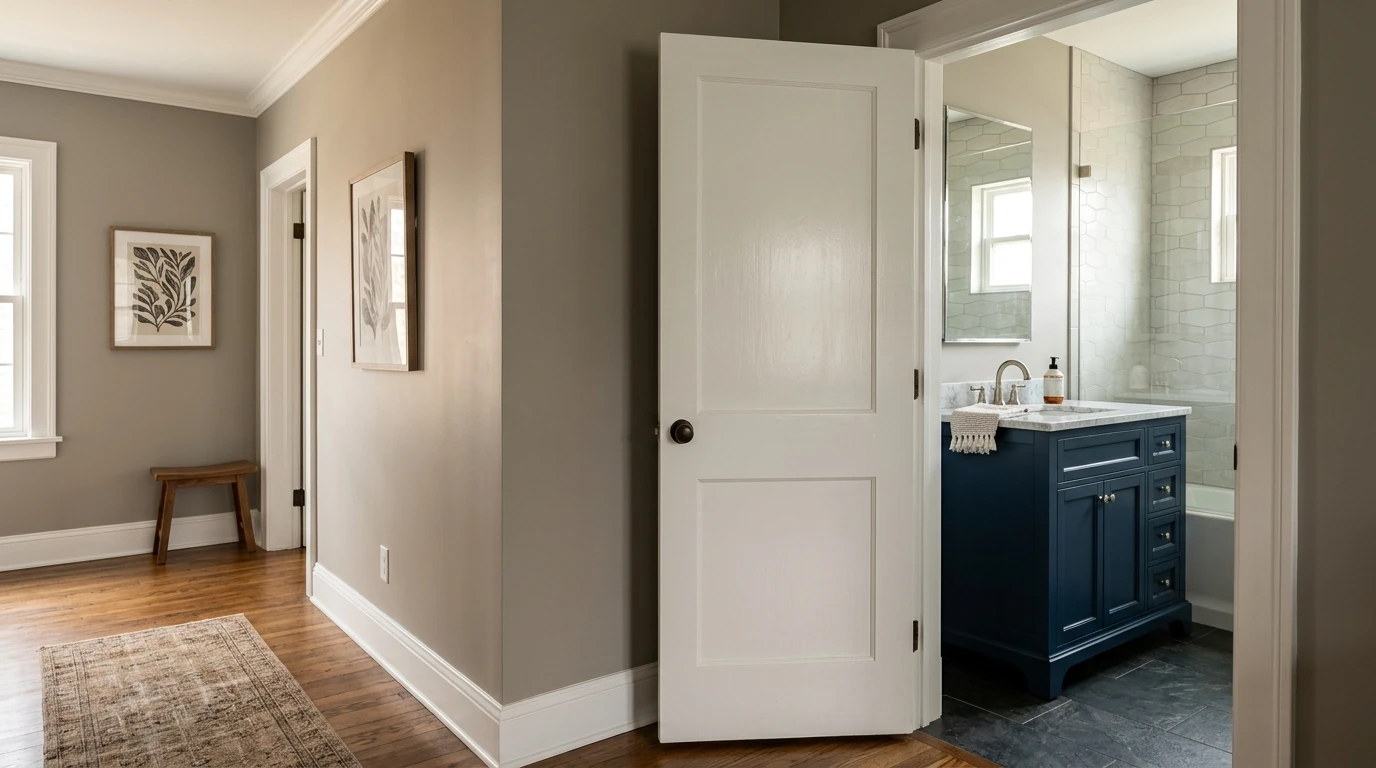
Knowing where to use semi-gloss paint can save you from a finish that chips, peels, or just looks wrong a year after painting. The good news is that the answer is pretty straightforward. Semi-gloss paint belongs anywhere that needs to be wiped down regularly, anywhere moisture is part of daily life, and anywhere you want trim and architectural details to pop. Homeowners in Lenexa, KS run into this question most often when planning bathroom updates, kitchen repaints, and whole-home trim work. If durability and easy cleaning matter more than hiding every little wall imperfection, semi-gloss is likely the right call.
Understanding Semi-Gloss Paint Properties
Semi-gloss sits between satin and high-gloss on the sheen scale. It reflects more light than satin but does not have that intense mirror quality of high-gloss, which makes it a comfortable middle ground for surfaces that need to look clean while handling real daily use. The finish has a higher resin content than flat or eggshell paint, and that is what gives it a surface you can actually wipe down without worrying about damaging the finish.
The reflective quality does come with one honest trade-off. Semi-gloss tends to highlight surface imperfections more than a matte finish would. Nail pops, patching, and uneven texture become more noticeable under that sheen. That is not a reason to avoid it. It is just a reason to prep the surface well before you paint.
Most painters reach for semi-gloss on trim, doors, and architectural details because the sheen creates a visual contrast against flat or eggshell walls. That contrast is part of what gives a room its finished, defined look. It is both a functional and a design choice.
strongest Rooms for Semi-Gloss Paint
Semi-gloss holds up strongest in rooms where surfaces face moisture, grease, or a lot of physical contact day after day. These are the spots where a flatter finish starts looking dingy and worn long before it should.
- Bathrooms, where steam and splashing water make a moisture-resistant finish genuinely necessary.
- Kitchens, where grease, steam, and food splatter work their way onto walls and cabinets on a regular basis.
- Laundry rooms, which face the same humidity challenges as bathrooms but often get overlooked at paint time.
- Children's bedrooms and playrooms, where crayon marks, scuffs, and handprints need to wash off without damaging the finish.
- Hallways and entryways that see constant contact from bags, strollers, and everyday foot traffic.
Kitchen Applications
In kitchens, semi-gloss is the standard finish for cabinets, doors, and any wall area near the stove, sink, or prep counter. Grease and steam break down flat and eggshell finishes over time, leaving them dull and nearly impossible to clean without leaving marks. Semi-gloss resists that breakdown and wipes down cleanly. It also bounces light around, which makes kitchen spaces feel brighter. That is a welcome bonus in rooms that often do not have a lot of natural light near the cooking zone. If you are thinking about a full kitchen interior refresh, semi-gloss is typically what goes on cabinet surfaces and any accent wall that sits near moisture-prone areas.
Bathroom Applications
Bathrooms are the most demanding moisture environment in a home. Steam from showers and baths saturates the air regularly, and a finish that absorbs moisture will peel, blister, and mold over time. Semi-gloss resists that moisture at the surface level, which reduces the risk of finish failure and makes cleanup after a steamy shower much simpler. It also holds up well against the cleaning products most people use on bathroom walls and vanity surfaces. Pair a semi-gloss wall finish with a properly functioning exhaust fan and you give your bathroom the strongest chance of staying clean and looking good for several years between repaints.
Semi-Gloss for Trim and Architectural Details
Trim is the single most universally recommended application for semi-gloss paint. Baseboards collect scuffs from shoes, vacuums, and furniture. Door frames absorb the oils from hands pushing through them dozens of times a day. Window casings collect dust and need periodic wiping. Moldings and wainscoting serve as visual anchors in a room and do their job better with a finish that holds its color and sheen rather than dulling from contact.
The contrast between semi-gloss trim and a flat or eggshell wall is part of the design logic, not a side effect. That sheen difference is what makes architectural details read as distinct elements and gives a room its structured, intentional appearance without complicating the color palette.
For homeowners who want to address trim throughout a whole home, interior trim painting done professionally delivers even coverage across baseboards, door frames, and window casings without the brush marking that often shows up on narrow profiles when painted by hand without the right tools and technique.
Surface Preparation for Semi-Gloss Application
Because semi-gloss reflects light, any surface flaw underneath becomes more visible once the finish cures. That means preparation matters more here than it does with flatter finishes. The good news is that proper prep follows a consistent, learnable sequence no matter what surface you are working on.
- Clean the surface thoroughly to remove grease, dust, and any residue that would prevent paint from bonding.
- Sand down any rough patches, bumps, or old brush marks that would show through the new finish.
- Fill nail holes, gouges, and cracks with patching compound and allow full cure time before sanding flush.
- Apply a bonding primer if you are painting over a flat or matte finish, a glossy surface, or bare drywall. Semi-gloss needs a surface it can grip.
- Lightly sand the primed surface and wipe clean before the first finish coat goes on.
- Apply two finish coats of semi-gloss, allowing adequate dry time between coats for full sheen uniformity.
Skipping the primer when going from flat to semi-gloss is one of the most common mistakes people make. Flat paint is porous and highly absorbent. Semi-gloss applied directly over it without a sealing primer will soak in unevenly and leave you with a blotchy, inconsistent sheen even after two full coats.
Compatibility with Existing Paint Finishes
If you are painting semi-gloss over an existing finish, what is already on the surface matters. Going from flat to semi-gloss without a primer leads to poor adhesion and an uneven sheen. Going from high-gloss to semi-gloss requires a light sanding first so the new coat has something to grip. Neither of these is a complicated fix once you know it is needed.
In most renovation situations where the existing finish is in decent shape and the surface is clean and sanded, a quality bonding primer handles the compatibility issue cleanly. Where the existing finish is peeling or showing signs of adhesion failure, that failing material needs to come off before anything new goes on. Semi-gloss applied over a failing surface will not hold up reliably no matter how good the paint is.
Color Selection and Semi-Gloss Appearance
Color choice affects how the sheen reads once the paint is dry. Lighter colors tend to amplify the reflective quality of semi-gloss more noticeably, which can make a small bathroom or kitchen feel brighter but can also make surface imperfections more visible at certain angles. Deeper, more saturated colors absorb more light even with a semi-gloss finish, so the sheen appears a bit more subdued than that same sheen would on a white or pale tone.
For trim, white and off-white semi-gloss tones are the most common choice because they create strong contrast against colored walls. When the goal is a more tonal, monochromatic look, choosing a trim color only a value or two lighter or darker than the wall color, while using semi-gloss on trim and satin on walls, keeps the sheen contrast without a jarring color break. If you are not sure which direction to go, working through those choices during a color consultation before any paint goes on the wall saves you from second-guessing a finished room.
When to Avoid Semi-Gloss Paint
Semi-gloss is not the right finish for every surface. There are situations where a different sheen will give you a result that looks and holds up better.
- Large open walls in living rooms and dining rooms, where flat or eggshell finishes minimize the look of wall texture and minor imperfections.
- Ceilings, where flat paint diffuses light evenly and avoids the texture variations that semi-gloss would emphasize under raking light.
- Older walls with significant texture, patching history, or surface irregularities that a reflective finish would draw attention to.
- Spaces where a soft, muted aesthetic is the goal, since semi-gloss introduces a visual energy that can conflict with quieter room designs.
Whether semi-gloss works on walls specifically depends on the wall condition and what the room is used for. In a well-prepped kitchen, semi-gloss walls make real functional sense. In a master bedroom with textured drywall, a flat or eggshell finish will look more refined and be far more forgiving of what is underneath.
Maintenance and Cleaning Guidelines
One of the strongest practical reasons to choose semi-gloss in high-traffic areas is how easy it is to keep clean. A mild dish soap solution and a soft cloth handle most stains and handprints without harming the finish. In bathrooms and kitchens, a diluted all-purpose cleaner takes care of grease and soap scum effectively. The one thing to avoid is abrasive scrubbers. Even if they do not visibly scratch the film, they will create dull spots in the sheen over time.
A light wipe-down of trim, doors, and kitchen surfaces every few weeks keeps buildup from setting into the finish. Semi-gloss that gets consistent attention rather than only being cleaned when it looks visibly dirty will hold its sheen and color considerably longer. Touch-up painting is also simpler on semi-gloss than on flat finishes because the sheen level makes blending new paint into existing areas more predictable, as long as you use the same product and sheen.
Why Choose Westlake Ace Hardware Painting Services Kansas City Metro
Picking the right finish is just the first step. Getting a result that actually lasts comes down to how the surface is prepared and how carefully the paint is applied. That is where Westlake Ace Hardware Painting Services Kansas City Metro makes a real difference for homeowners in Lenexa, KS. Every project starts with thorough surface prep, because rushing past that step is what causes semi-gloss finishes to show imperfections or fail adhesion within the first year. All residential work is completed using Benjamin Moore paints, with color consultation and physical samples included so you can see exactly how your sheen and color choices will look before anything goes on the wall. A workmanship guarantee backs every project. The crew members are background-checked W-2 employees, which means the same high standards show up on every surface, every time. Whether the project is trim throughout the home, a bathroom refresh, or a full kitchen repaint, the goal is a finish you will genuinely enjoy living with. Get an Estimate and let us walk you through the next steps.
FAQ
How many coats of semi-gloss paint do I need?
Two coats is the standard for most surfaces. A properly primed surface in good condition will reach full coverage and a consistent sheen with two coats. If you are making a big color shift or painting over a heavily repaired area, a targeted third coat in those spots may help even things out.
Can you paint semi-gloss over flat paint?
Yes, but you need a bonding primer in between. Flat paint is porous and will absorb semi-gloss unevenly without a sealing layer underneath, leaving you with a blotchy sheen. Priming first gives the new coat a consistent surface to grip and helps the sheen come out looking right across the whole area.
What are the disadvantages of semi-gloss paint?
The main one is that the sheen makes surface imperfections more visible than a flatter finish would. Nail holes, patching work, texture variations, and brush marks all catch the light differently than the surrounding surface. Good prep before you paint is the most effective way to minimize this. Semi-gloss also rewards careful application technique to avoid lap marks and roller stipple.
Does semi-gloss paint fade over time?
Semi-gloss is generally more resistant to fading than flat finishes because the denser resin content offers some protection at the surface. On interior surfaces under normal lighting, fading is rarely a concern. Surfaces that get strong direct sunlight through windows may see some color shift over several years, but that has more to do with pigment quality and light exposure than the sheen level itself.
Is it okay to use semi-gloss paint on walls?
Absolutely, in the right rooms. Kitchens, bathrooms, laundry rooms, and children's rooms are all great candidates because cleanability matters more in those spaces than hiding every wall texture variation. In living rooms, bedrooms, and other areas where the wall condition is decent but not flawless, a satin or eggshell finish typically looks more polished and is more forgiving of what is underneath. It really comes down to what the room asks of the finish.